Ernie Rhyne , formerly a managing director at Microsoft (Nasdaq: MSFT), has been appointed vice president of the U.S. public sector business at information security company CyberArk , according to a LinkedIn post published Friday.
Rhyne spent more than 13 years at Microsoft, where he previously oversaw modern work and security offerings under the company’s federal division and held senior director roles focused on commercial health care and government customers.
He also served in program and sales management positions at LAM Research and worked as a U.S. Navy engineering production supervisor earlier in his career.
Newton, Massachusetts-based CyberArk offers identity security software designed to help organizations manage privileged access to hybrid cloud workloads and business applications.
The new award follows earlier Longbow contracts for radar electronics, mast-mounted assemblies and Apache radar sustainment services.
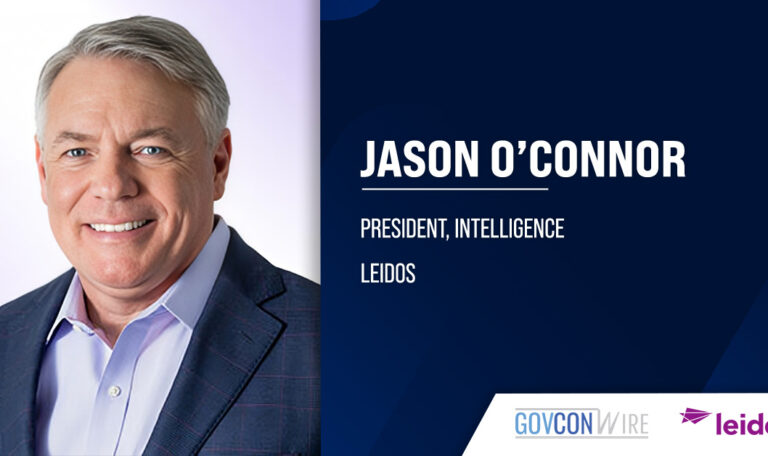
Leidos will support an asset tracking system covering more than 80 million government property items across over 50 agencies.
AMERICAN SYSTEMS has secured a $113.4 million follow-on task order to support a Department of War customer's critical technology work.
Scolese led the National Reconnaissance Office from 2019 to 2026 and previously directed NASA’s Goddard Space Flight Center.
Lockheed's missile backlog reached $142.5 billion after a seven-year Patriot Advanced Capability-3 contract.
DHS has forecast a sole-source, 12-month follow-on BPA worth up to $100 million for identity, credential and access management support.
Proposals for the multiple-award vehicle are due Dec. 4 through the PIEE Solicitation Module.
Leidos will leverage capabilities from its Kudu Dynamics acquisition and its existing cybersecurity technologies to carry out the work.
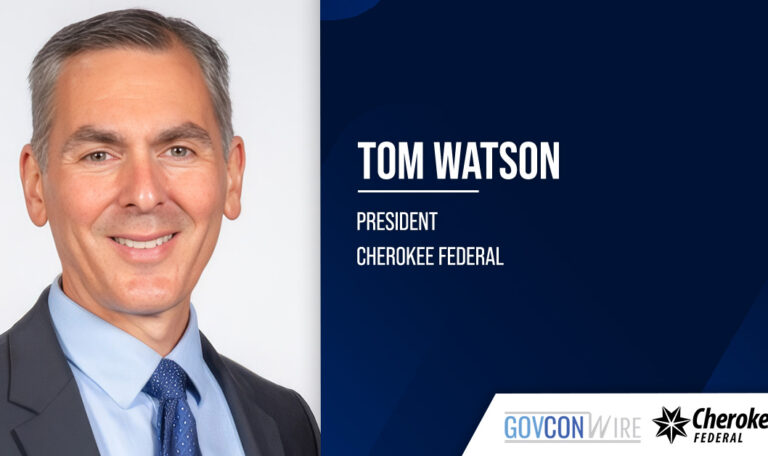
A Cherokee Federal company has secured a $99.3 million Navy contract to sustain protective and life-support equipment for sailors.
Michael Teegardin, a former ASRC Federal executive and U.S. Army veteran, has joined Akima as VP of marketing and communications.
The small business RMAS contract carries a $1.5B ceiling, while the full-and-open PLS contract has a $6.09B ceiling over 10…
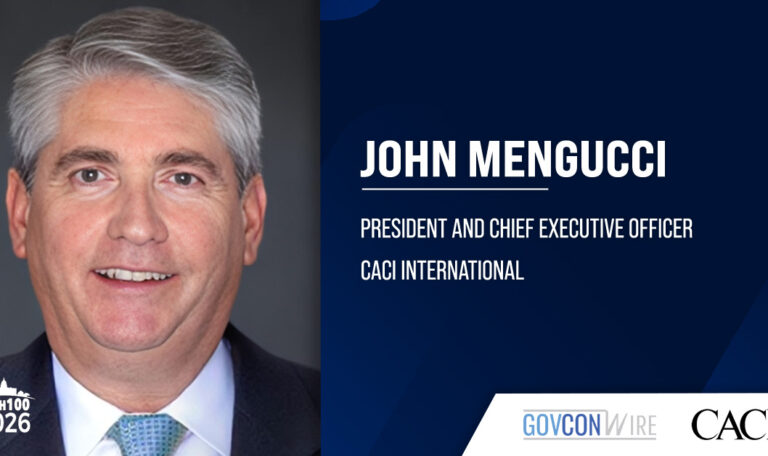
CACI reported an 8.2 percent revenue increase to $2.5 billion for Q1 FY27 and raised its fiscal 2027 revenue and…
You’ve already read all related articles.
VIDEO