

Hon. Emil Michael doesn’t like the term “valley of death.” Long used to describe the place where promising technology projects go to die between incubation and actually being implemented, it’s become an obstacle — almost a cliche — that the government contracting and tech communities have taken as a given.
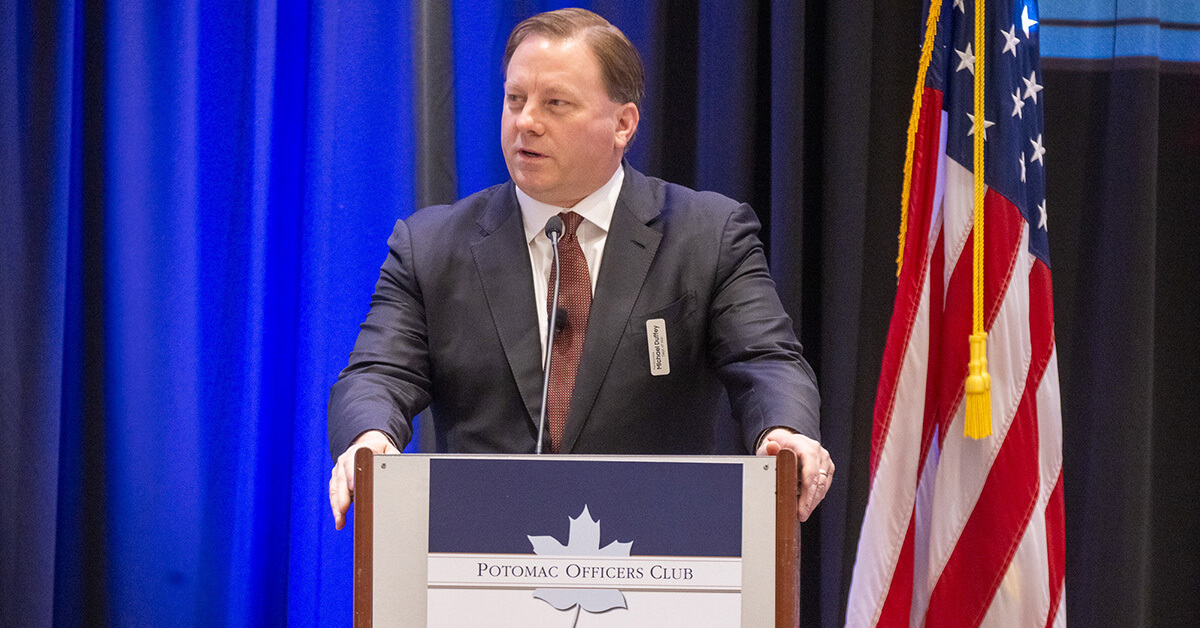
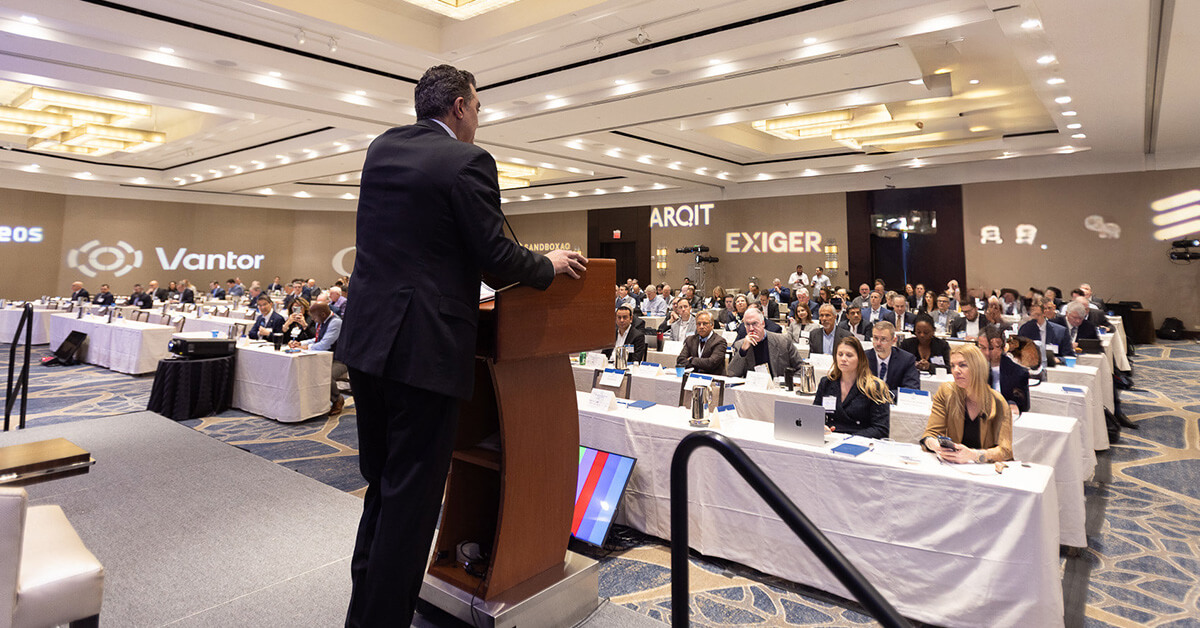
But at Potomac Officers Club’s 2026 Defense R&D Summit on Thursday, Hon. Michael, the under secretary for research and engineering at the Department of War and Hon. Michael Duffey, the DOW’s under secretary for acquisition and sustainment, laid plain their intent to dismantle this creaky infrastructure and build something faster, more effective and more competitive.

For more live insights from Pentagon leadership on technology priorities, attend the 2026 Artificial Intelligence Summit on March 18, featuring keynote speaker Cameron Stanley — the new chief digital and artificial intelligence officer at the DOW. Register now!
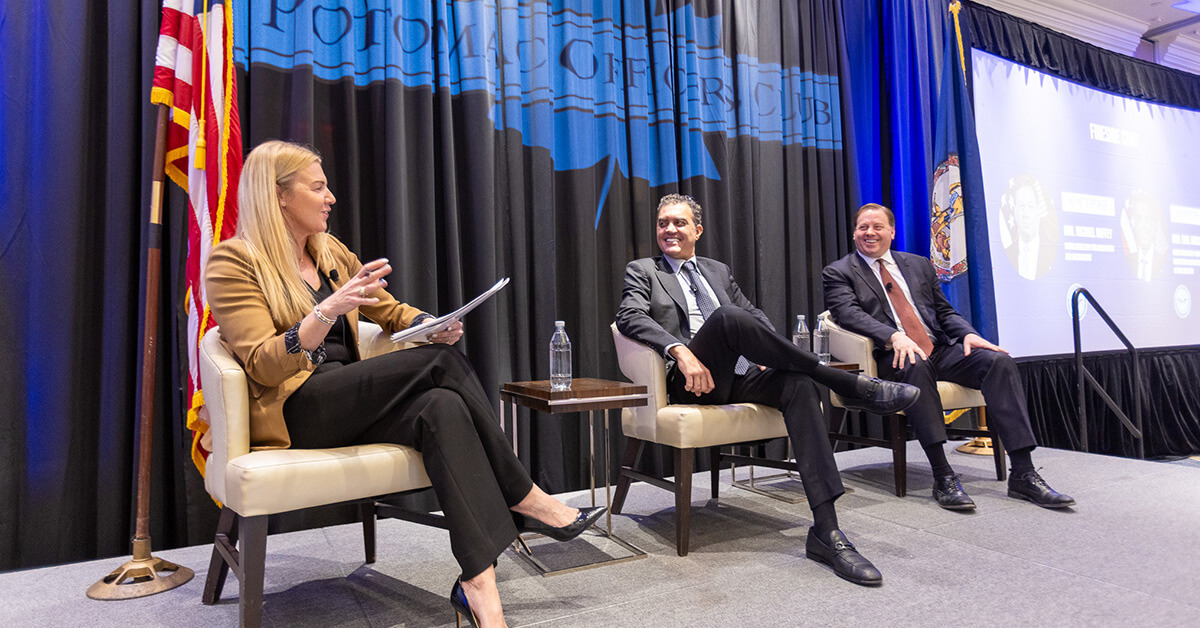
Just a day before the event, the two officials, who had reportedly never appeared onstage together before, were named to Executive Mosaic’s Wash100, the annual recognition of top talent in government contracting. EM CEO and Wash100 Award Founder Jim Garrettson presented them with their awards at the conference. Exiger’s Carrie Wibben Kaupp subsequently moderated a fireside chat between the pair.
What Is the Proposed Plan to Circumvent the Valley of Death?
To put the “valley of death” to rest, Michael and Duffey identified a clear, multi-step process that companies with a promising invention or solution they believe in can turn to. (Duffey asked the audience to “imagine a different future…an arsenal of freedom built by acquisition agility.”)
“We break it into parts. We have different elements in the funding cycle. We have [the] Defense Innovation Unit at the front end that can do super rapid contracts. It has a decent amount of money to get startups to their first prototype. We have APFIT [Accelerate the Procurement and Fielding of Innovative Technologies] that then can take them and help scale them,” Michael said, continuing, “We have the Office of Strategic Capital to give them low-cost loans to get them to produce things we need at scale. And then private capital…we are in a moment now where there is more private capital for defense tech than ever before in history.”
What Is Expected of Industry in the New Acquisition Approach?
This new system, Michael posited, flips the script on the traditional defense industrial base dynamic. Since the government is now offering funding and pathways, it’s up to industry to build and complete their contracted duties quickly—and to potentially share risk and invest up front too. That’s where the PAC-3 Missile Segment Enhancement, or PAC-3 MSE, contract with Lockheed Martin comes in.
Duffey spoke about how this new framework is a major shift for the department. It follows Secretary of War Pete Hegseth’s Acquisition Transformation Strategy’s promise to “award companies bigger, longer contracts for proven systems so those companies will be confident in investing more to grow the industrial base that supplies our weapons systems more and faster.” Not only will it triple production of the Patriot Missile, but the agreement only issues Lockheed its money when the order is finished, which theoretically incentivizes them to get the job done quickly.
“We also recently announced a billion-dollar equity investment in L3Harris to grow our solid market rocket motor industrial base. As with any equity investment in a mature, proven company, we are funding growth while enabling the proceeds to return to the treasury at a future date. Speed, volume and growth, at no cost to the taxpayer,” Duffey outlined.
What Kind of Environment Will This Approach Produce?
While Michael and Duffey spent much of their keynotes and fireside chat at the Defense R&D Summit encouraging new entrants in the contracting space — with Michael highlighting how Anduril, Palantir and SpaceX all had to sue the DOW a decade ago to get their first contracts — they also clearly aren’t discounting the primes whose reign these companies are disrupting. Michael said that hybridizing DOW’s portfolio with both the work of new entrants and traditional primes creates a “competitive, dynamic” environment with “new technologies being shared, refilling our stockpiles so that we’re ready for any scenario.”
Duffey further discussed Golden Dome and the department’s effort to scale munitions production, highlighting that such a strong demand signal requires a consideration of many types of solutions, “alternative” and those from “proven” primes alike, to solve challenges like directive energies and missile interceptors.
“With the supply chain and workforce required to develop and design these weapon systems, we know there’s a certain need for these systems over time. And enabling our industry partners to make investments and optimize how they’re doing business, I think, is a benefit to everybody,” he elaborated.
The Defense R&D Summit was just the beginning. You won’t want to miss Potomac Officers Club’s Q1-capping 2026 Artificial Intelligence Summit on March 18, which will cover all of the key pathways for government-industry collaboration on AI. Make sure your organization is represented.
What Was the Under Secretaries’ Ultimate Message to Industry?
On one hand, the Department of War is scrutinizing various contracts right now to evaluate their effectiveness and efficiency. According to Holland & Knight, Secretary Hegseth earlier this month announced “a line-by-line review of DOW 8(a) sole-source contracts of more than $20 million” and “stated his goals were to get rid of contracts that don’t ‘help win wars’ and do away with pass-through schemes.”
Nonetheless, Michael and Duffey’s main messages to the GovCon crowd at the Potomac Officers Club event were invitations to bring capabilities forward.
“If you have a solution that can help our warfighters win the next war, then we’re your customer and the front door is wide open to come talk to us,” Michael said. (After which he mentioned $200 billion that OSC is “unleashing in preferred lending authority…[to] create domestic production of critical minerals.”)
Duffey said the current acquisition system is tied to the long-dead Cold War and that the community has to shift their mindset from writing requirements to solving problems.
Ultimately, through their new approach, Michael stated he wants to phase the much-ballyhooed valley of death into a “rainforest of opportunity.”