

- DHS established a PEO for UAS and C-UAS to coordinate drone and counter-drone procurement and deployment
- The PEO is seeking lightweight, rapidly deployable, small UAS
- The 2026 Homeland Security Summit on Nov. 10 devotes two panels to drone and counter-drone capabilities
The proliferation of unmanned aerial systems presents an escalating national security threat as adversaries leverage drones for surveillance, disruption and kinetic attacks.
To counter the risks posed by hostile drone use, the Department of Homeland Security has established a new office to fast-track the procurement and deployment of drone and counter-drone technologies to safeguard critical infrastructure and fortify national security.

The Potomac Officers Club is hosting panels on drones and counter-drone capabilities at the 2026 Homeland Security Summit on Nov. 10. The Safeguarding the Homeland: Coordination for Counter-UAS Operations panel will feature speakers from government and industry to address the threat posed by weaponized drones and swarms targeting critical infrastructure and mass gatherings. Meanwhile, the Code and Drones: DHS’s Parallel Fights to Build Cyber Talent and Field Unmanned Systems panel will see industry innovators dissect the drone and cyber challenges DHS is currently grappling with. Tickets are now available here.
What Is the PEO for UAS & C-UAS?
Established in January, the Program Executive Office, or PEO, for Unmanned Aircraft Systems and Counter-Unmanned Aircraft Systems is tasked with securing the national airspace from drone threats.
“[T]here needs to be a belly button that is ensuring that what all of our operational components are doing is consistent and applied in a way that is a representation of the department’s mission and the department’s implementation in the drone and counter drone space. That won’t happen successfully without the Program Executive Office.” — Steven Willoughby, executive director of DHS PEO for UAS and C-UAS
Former DHS Secretary Kristi Noem, a 2026 Wash100 winner, said the PEO aligns with the Trump administration’s goal of strengthening U.S. leadership in the development and commercialization of UAS.
“Drones represent the new frontier of American air superiority,” stated Noem. “Under President Trump, we are entering a new era to defend our air superiority to protect our borders and the interior of the United States.”
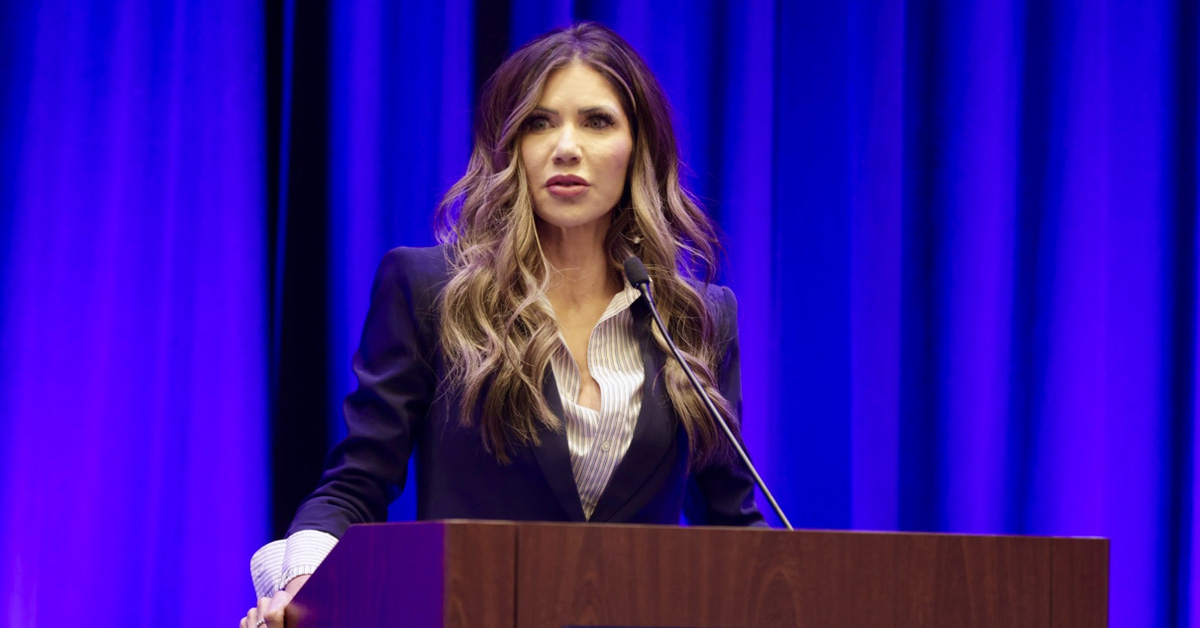
Noem delivered a keynote address at the 2025 Homeland Security Summit. Senior DHS leaders, including Deputy Secretary Troy Edgar and Chief Procurement Officer Paul Courtney (pending approval), will take the stage at the 2026 Homeland Security Summit on Nov. 10 to discuss the agency’s investments in drone, counter-drone and other emerging technologies. Sign up today to secure your seat!
Leadership
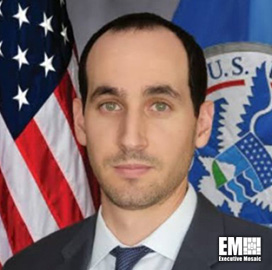
DHS appointed Steven Willoughby as executive director of the PEO. Willoughby previously served as deputy director of the DHS Office of Strategy, Policy and Plans’ Counter-UAS Program. He joined the agency in 2019 as a program analyst within the Office of the Secretary – Joint Requirements Council Gatekeeper.
Prior to DHS, Willoughby served as the director for aviation and surface transportation for the National Security Council at the White House.
He also spent eight years at the Transportation Security Administration, where he held multiple roles, including as a transportation security specialist.
Responsibilities
According to DHS, the PEO is in charge of making strategic investments in drone and counter-drone technologies. The department said in January that it was finalizing a $115 million investment to procure counter-drone technologies.
The office is also responsible for coordinating department-wide and interagency drone and counter-drone efforts.
In an interview with the DHS Science & Technology Directorate’s Technologically Speaking podcast, Willoughby shared that the PEO is “really the central coordinating element for [interagency partnerships] on behalf of” DHS operational components. He noted that Customs and Border Protection, the Secret Service, the Coast Guard, and the Transportation Security Administration are “constantly working hand in hand” with the Department of War, the FBI and other agencies.
“[T]here needs to be a belly button that is ensuring that what all of our operational components are doing is consistent and applied in a way that is a representation of the department’s mission and the department’s implementation in the drone and counter drone space,” the official explained. “That won’t happen successfully without the Program Executive Office.”
Trump signed the Preventing Emerging Threats Act of 2018, which grants DHS components the statutory authority to detect, track and disable drone threats. Under the Safer Skies Act, signed into law in December 2025, DHS components and state, local, tribal and territorial law enforcement partners received expanded authorities to respond to drones that pose a danger to public safety.
DHS said that it has conducted over 1,500 counter-drone missions since 2018.
What Is the Counter-Drone Purchasing Tool?
Through the C-UAS Purchasing Tool, a free resource developed by S&T’s National Urban Security Technology Laboratory, first responders can pick and acquire C-UAS technology. The tool provides a scorecard that compares offerings based on mission requirements, taking into consideration operational factors such as budget, terrain and radio frequency environment.
What DHS’ Drone Push Means for Industry
The increased prioritization of drones and counter-drone technologies at DHS is creating abundant opportunities for industry.
In October, the Federal Emergency Management Agency launched a grant program allocating $500 million to provide states and territories with drone detection and response capabilities. Half of the allocation was awarded to the National Capital Region and the 11 states hosting the FIFA World Cup 2026. The rest will be distributed in fiscal 2027.
Contract Opportunities
1. Counter-UAS
DHS has already awarded positions on the potential $1.5 billion indefinite-delivery/indefinite-quantity contract for C-UAS technologies. Under the two-track IDIQ, 12 companies will provide hardware and services to address drone threats.
Leidos and BAE Systems secured positions in Track 1, focused on hardware, software, installation, maintenance and customization, and Track 2, which is for comprehensive services, including support for research, development, testing and evaluation.
DHS issued a combined synopsis and solicitation for the requirement in December. According to the agency, it might add vendors to the IDIQ in the future. The solicitation may be opened periodically to accept new proposals or to remove contractors that have not received an active order for over a year.
2. Recoverable Small UAS
The PEO has issued a request for information seeking recoverable, reusable, lightweight, rapidly deployable small UAS to support frontline operational awareness, search and rescue, incident response, disaster assessment, perimeter security, surveillance and law enforcement.
The RFI, issued under the DHS Drone Development Program, stated the PEO is specifically interested in systems that operate without cloud connectivity and support AES-256 encrypted command-and-control and data or video links. The system must also meet the Defense Innovation Unit’s Blue UAS and Green UAS standards.
Additionally, DHS wants systems that minimize reliance on foreign components, software, firmware, manufacturing and assembly, and data services.
The agency may conduct demonstrations and challenge events to assess vendor-proposed systems. Responses are due Oct. 5.
Discover more opportunities to provide advanced capabilities to DHS and its components at the 2026 Homeland Security Summit on Nov. 10. The event will feature officials who lead acquisition and technology initiatives at the department, including:
- Anthony Crane, executive director of the C-UAS Defense Capability Group at CBP
- Baibhav “BoBo” Devkota, executive director of the Border Enforcement and Management Systems Directorate at CBP
- Ruynard Singleton, executive director of the Program Management Office Directorate at CBP
- Julie Brewer, executive director for the Office of Innovation and Collaboration at the S&T Directorate
More speakers from across the DHS will be announced soon. Tickets are selling fast— sign up today to secure your seat!