

- CLPS 2 awardees will compete for future lunar surface delivery missions
- NASA has raised the CLPS 1.0 ceiling to $4.2 billion
- Blue Origin will carry NASA’s nuclear-powered PROMISE rover to the moon
NASA has selected eight companies for the potential 10-year, $10 billion Commercial Lunar Payload Services 2, or CLPS 2, contract to deliver science, technology and infrastructure payloads to the moon’s surface.
The agency announced the selections Saturday during an aerospace expo and air show at Kennedy Space Center in Florida, along with several other awards supporting its Moon Base campaign.
What Is the Scope of the CLPS 2 Contract?
CLPS 2 is a multiple-award, indefinite-delivery/indefinite-quantity master contract. The selected companies may bid on task orders for lunar delivery missions, under which they will manage, build and operate landers carrying NASA payloads to the moon.
Johnson Space Center started the procurement earlier this year with a sources sought notice to collect industry input on potential CLPS 2 contractors.
NASA also increased the ceiling of the existing CLPS 1.0 contract from $2.6 billion to $4.2 billion to support initial Moon Base objectives. The first CLPS contract runs through November 2028, and companies will have until November 2033 to complete deliveries already awarded under it.
Which Companies Did NASA Select for CLPS 2?
The eight CLPS 2 awardees are:
- Blue Origin
- Firefly Aerospace
- Intuitive Machines
- ispace-U.S.
- Lockheed Martin Space
- Northrop Grumman Space Systems
- SpaceX
- Voyager Technologies
What Did NASA Officials Say About the Awards?
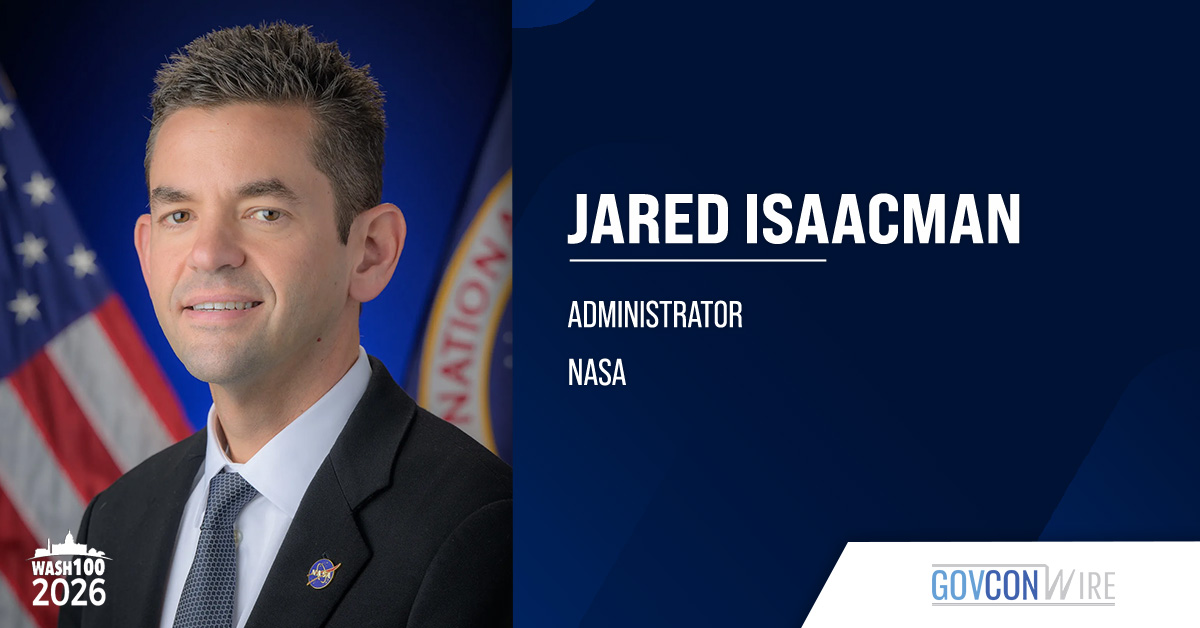
NASA Administrator Jared Isaacman described the Moon Base as a campaign built one mission at a time, with lessons from each flight applied to the next.
“When our astronauts return to the Moon, they will arrive with the first elements of the Moon Base already waiting for them on the surface,” added Isaacman, a 2026 Wash100 awardee.
Carlos Garcia-Galan, manager of the Moon Base Program, noted that NASA has combined multiple efforts into a single program in the eight months since Ignition. He explained that the agency is now awarding contracts and forming partnerships to speed up development.
Who Will Deliver NASA’s PROMISE Rover?
NASA awarded Blue Origin a $94 million base contract to transport the Polar Rover for Observation, Mapping, and In-Situ Exploration, or PROMISE, to the moon’s south pole. A performance-based option could add $140 million to the award, which expands a May 2026 task order for the delivery of two lunar terrain vehicles.
Blue Origin will use its Mark 1 lander to land and deploy the six-wheeled, nuclear-powered rover. NASA’s Jet Propulsion Laboratory will manage the mission and build PROMISE using spare and test hardware from the Curiosity and Perseverance Mars rover programs. The agency is targeting a late 2028 launch for an 18-month mission.
What Other Moon Base Awards Did NASA Announce?
NASA also named the following awardees:
- Arrow Science and Technology, Blue Origin and Impulse Space: six task orders worth about $1.3 billion combined under the 10-year, $5 billion Venture-Class Acquisition of Dedicated and Rideshare contract to integrate and transport Moon Base cargo
- SpaceX: a task order under an existing lunar logistics contract to launch communications satellites to cislunar space aboard Starship in 2028
- Honeybee Robotics: energy storage components for the Mini-Communications and Solar Tower
- Redwire: power generation components for the tower
- Yank Technologies: wireless power transfer hardware for the tower
One of the transportation missions will carry the CAPSTONE 02 spacecraft, part of a mission NASA awarded to Advanced Space, to test navigation and communications around the moon.
The latest awards follow the Moon Base contracts NASA issued in May to Astrolab, Lunar Outpost, Blue Origin and Firefly Aerospace.
What Upcoming Moon Base Solicitations Does NASA Plan?
NASA intends to issue a directed call under its Next Space Technologies for Exploration Partnerships solicitation, NextSTEP-3 B, to address high-priority data gaps in Moon Base planning. The resulting work could include small spacecraft missions, payloads on Moon Base flights or purchases of commercially collected data.
The agency also expects to release a separate solicitation for fully integrated power systems in early 2027. Meanwhile, Marshall Space Flight Center will assemble and test the Mini-Communications and Solar Tower components before they are sent to the lunar surface.