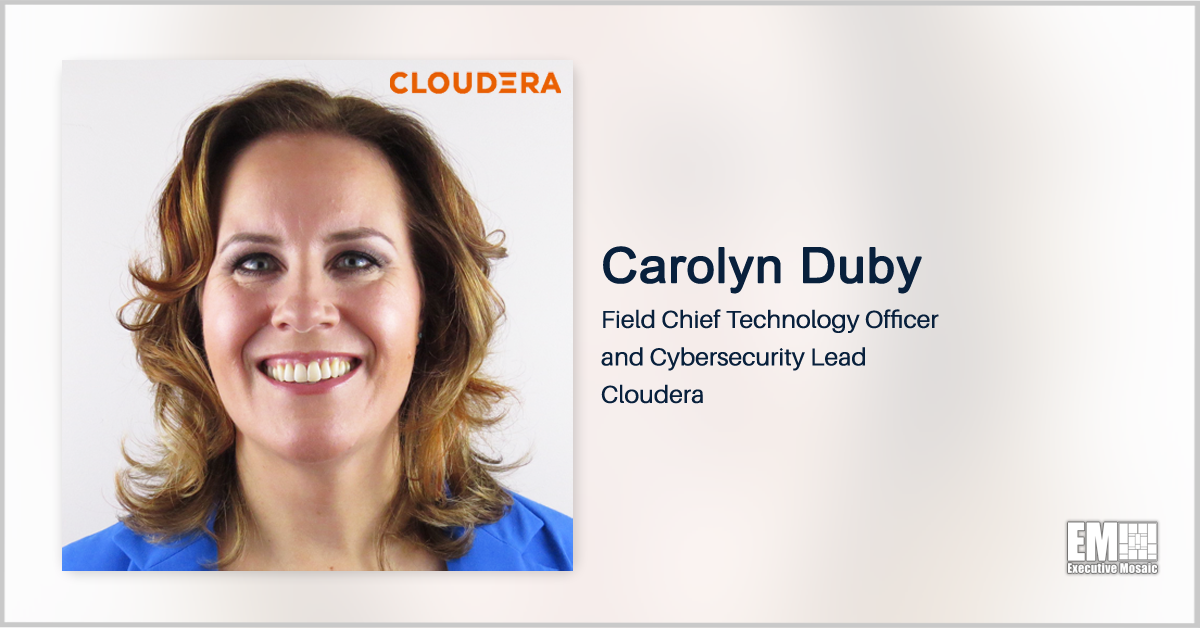
“AI speeds analysis and is particularly effective when agencies move from signature-based to behavior-based threat detection,” Duby wrote.
“A signature-based approach is good for detecting threats we already know about, but a behavior-based AI approach can adapt to new threats by looking for anomalies such as changes in the behavior of a server or endpoint device,” she added.
Duby cited how AI could help agencies perform investigations and use more advanced algorithms to detect cyberthreats and other vulnerabilities.
She discussed how the application of AI in data analysis could enable agencies to implement cyber hygiene practices while complying with government mandates.
Duby also mentioned Cloudera’s strategic partnerships with other companies, such as NVIDIA (Nasdaq: NVDA) and Raytheon Technologies’ (NYSE: RTX) intelligence and space business, to meet the cybersecurity needs of agencies.