
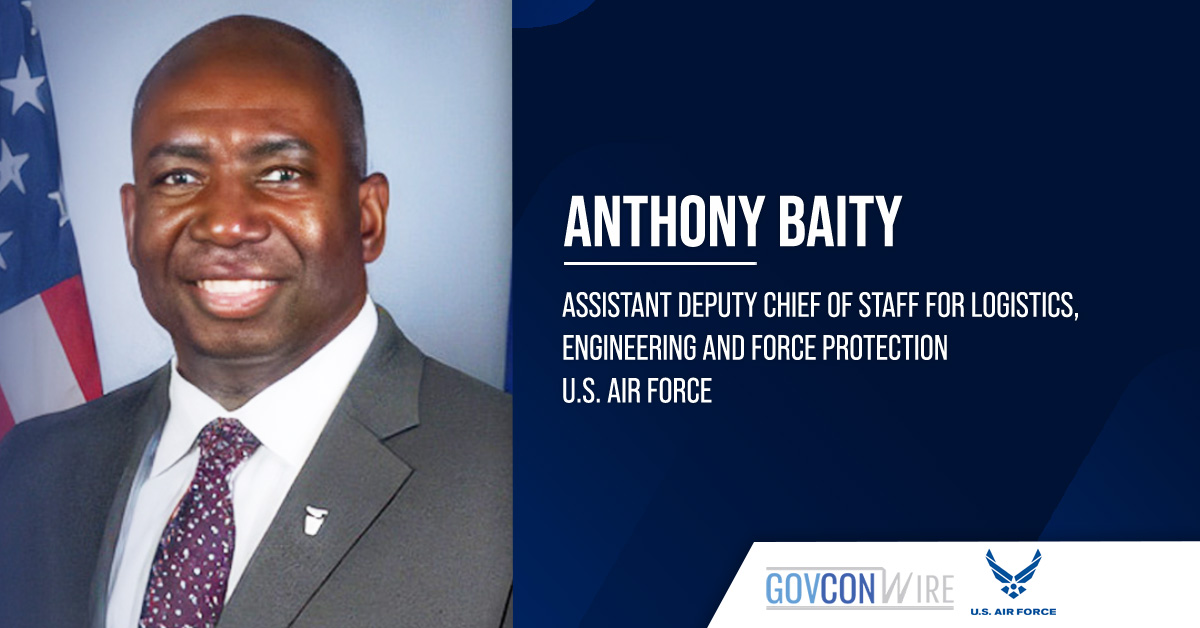

- There are USAF logistics business opportunities for smaller companies, said Anthony Baity
- The top service official said the USAF is interested in improved supply chains
- Get more partnership opportunities from Baity during his keynote at the 2026 Air and Space Summit!
A rapidly-changing defense environment is providing plenty of opportunity for small and medium-sized companies to help the Air Force tackle challenges across logistics and sustainment, according to a top service official.
Anthony Baity, Air Force assistant deputy chief of staff for logistics, engineering and force protection, told GovCon Wire in an exclusive interview ahead of his keynote address at the Potomac Officers Club’s 2026 Air and Space Summit on July 30 that these opportunities specifically include helping the USAF improve supply chains, more effectively leverage data and enhance maintenance.
The USAF is looking for new ways to move faster, more efficiently deliver capability and leverage innovation wherever it exists. Baity said the service is increasingly utilizing innovative acquisition vehicles like other transaction authorities as these, ultimately, improve readiness by delivering solutions at faster mission speeds.
How Do Other Transaction Authorities Help the Air Force?
Other transaction authorities, he said, specifically give the USAF a faster and more flexible way to partner with industry, evaluate emerging technologies and transition innovative ideas into operational capability.
“The companies that are the most successful are the ones that demonstrate how their solutions can help the Air Force become more ready, more resilient and more efficient,” Baity said.
Get the newest business opportunities in logistics, readiness and sustainment directly from Baity during his keynote address at the Potomac Officers Club’s 2026 Air and Space Summit on July 30! Hear exclusive investment insights into high-priority USAF programs. Get your burning questions answered during Baity’s Q&A. Secure your seat today!
What Are the USAF’s Priorities in 2026?
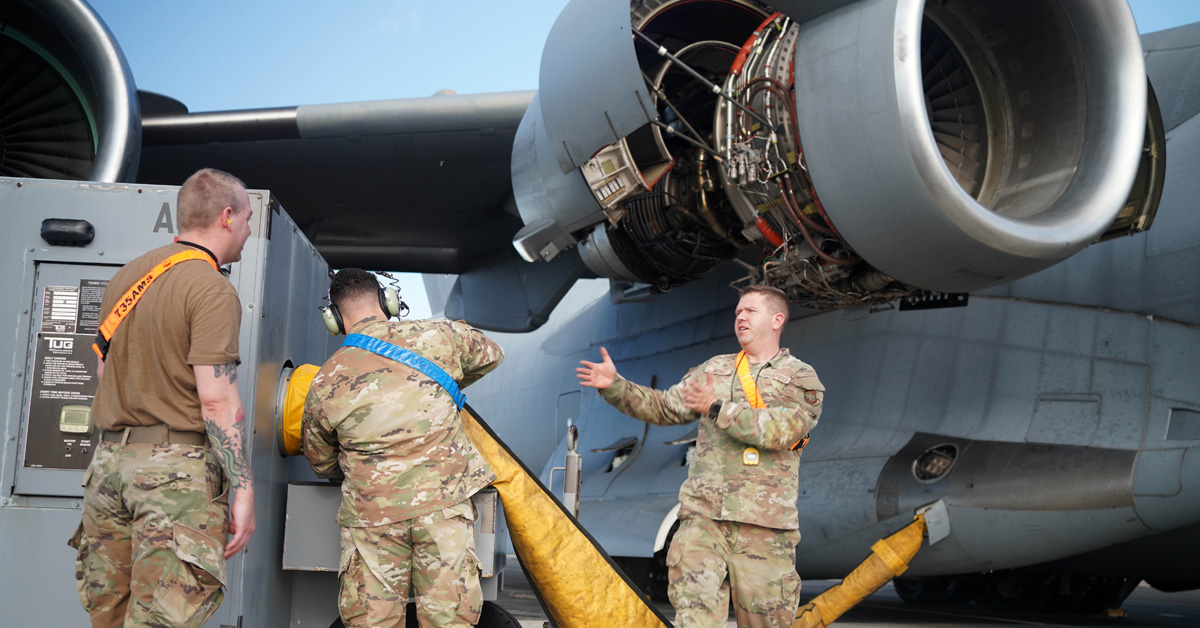
The USAF’s priorities in 2026 are firmly centered on readiness and Baity said everything his department does is focused with that in mind. To better achieve and sustain readiness, the service is prioritizing four key focus areas:
- Aircraft availability
- Infrastructure health
- Defending bases
- Strong airmen
Transparency will be crucial to the USAF achieving these readiness objectives. Baity said open discussions help the service and industry develop mutual trust by solving problems together before they become obstacles to execution.
Industry, for its part, should provide innovative ideas and commercial best practices that help the USAF boost its speed, resilience and readiness in an increasingly-complex operating environment.
“At the end of the day, the question is not simply how industry can support the Air Force,” Baity said. “It’s how we can work together to deliver readiness faster. Organizations that understand the mission, communicate openly and focus on result will be the partners best positioned to help us succeed.”
Win more and larger emerging technologies contracts in FY 2027 by attending the Potomac Officers Club’s 2026 Air and Space Summit on July 30. Hear directly from our distinguished keynote speaker lineup of top USAF and NASA leaders as they share their priorities, modernization strategies and acquisition plans:
- NEW—Brig. Gen. Mark Bigley, Space Command current operations division chief
- Anthony Baity, Air Force assistant deputy chief of staff for logistics, engineering and force protection
- Matt Anderson, NASA deputy administrator
- Gen. John Lamontagne, Air Force vice chief of staff
- Tom Ainsworth, Air Force acting assistant secretary for space acquisition and integration
- Dr. Eliahu Niewood, Air Force director for integrated capabilities and director of studies and analysis
Don’t miss this unique opportunity to join the conversation with the top minds in air and space technologies. Sign up today!
What Is the Air Force’s O&M Budget Request?
The USAF requested $102 billion in operations and maintenance funding in FY 2027. This includes about $4.3 billion to replace legacy equipment as part of the Enterprise IT and Base Information Transport Infrastructure program.
The service also requested $2.7 billion for Air Operations Training, an increase of 74 percent from the $1.6 billion enacted in FY 2026. This would provide enhanced high-end training and readiness through realistic, large-scale and technologically-advanced training exercises.
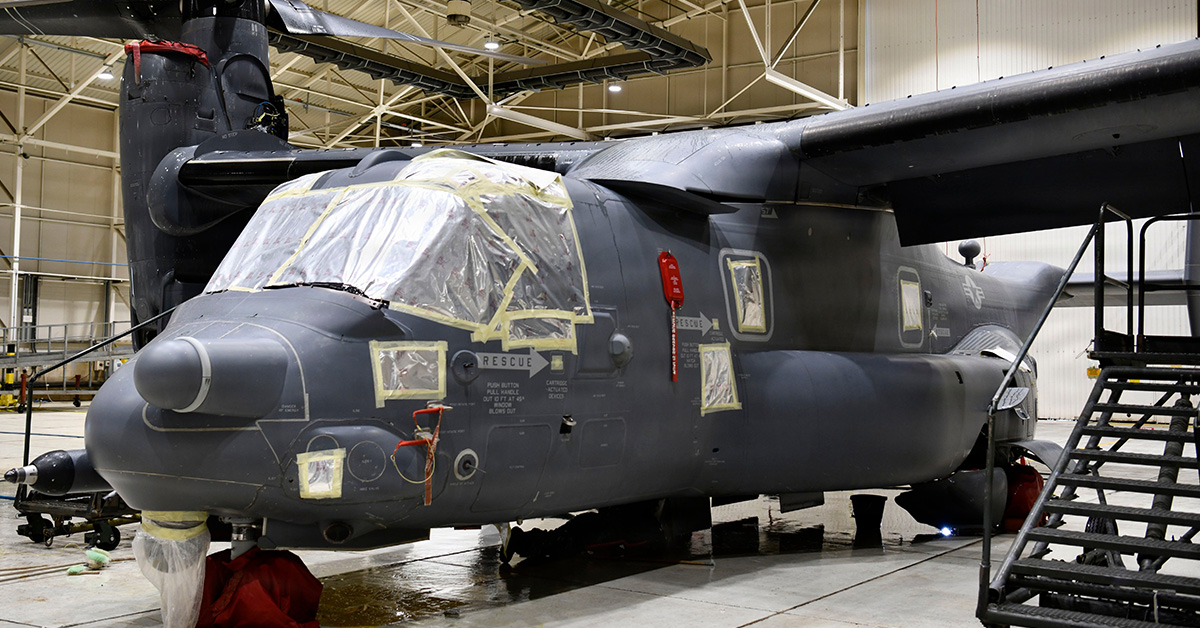
Why Is Readiness a Concern to Air Force Officials?
Readiness is a concern to Air Force officials because high usage rates of aircraft and weapon systems during the global war on terror have resulted in decreased availability. Troy Meink, USAF secretary and 2026 Wash100 Award winner, said in late 2025 that he found a broader readiness gap in the service than he expected in his first few months on the job. He saw many highly-capable platforms that were “non-operational, sitting around” because they didn’t have the parts to keep them operational, according to National Defense.
Meink said it was unacceptable for a part designed to last 400 hours to only last 100 hours and that the service needed to make proper investments to improve serviceability and reliability of weapon systems and the parts being used in them.
More than 20 years of conflict have degraded the USAF’s readiness with wide-ranging impacts on personnel, equipment and aircraft, the Government Accountability Office said in a November 2024 report. The USAF’s aircraft fleet is the oldest, smallest and least ready in its history, a challenge exacerbated by poor funding for O&M, according to a September 2025 report by the Mitchell Institute for Aerospace Studies.
The report recommended the USAF get a budget increase and transfer internal funding from research, development, test and evaluation accounts into O&M.