

- FishEye will operate as a wholly owned subsidiary of LeoLabs
- LeoLabs funded the deal with a loan from Hercules Capital
- Mirus Capital Advisors served as FishEye’s exclusive financial adviser
LeoLabs has acquired engineering services company FishEye Software as it works to field advanced missile warning and tracking radars faster.
The orbital intelligence company said Monday that FishEye will operate as a wholly owned subsidiary. LeoLabs used a loan from Hercules Capital to finance the purchase, while Mirus Capital Advisors served as FishEye’s sole financial adviser. Financial terms were not disclosed.
Why Did LeoLabs Acquire FishEye?
LeoLabs said customers in the U.S. and allied countries have committed more than $100 million in bookings for 2026, citing rising interest in its multi-mission radars. The company also holds a $150 million conditional loan commitment from the Department of War’s Office of Strategic Capital, intended to bring key radar infrastructure for national security missions online sooner.
The Office of Strategic Capital signed the conditional commitment in early November, with private investors set to match the federal loan in full, resulting in a $300 million package. LeoLabs plans to use the funding to complete two large U.S. radar factories by 2028 and add dozens of radars to its global network by 2030. The commitment remains subject to due diligence and other requirements before it can close.
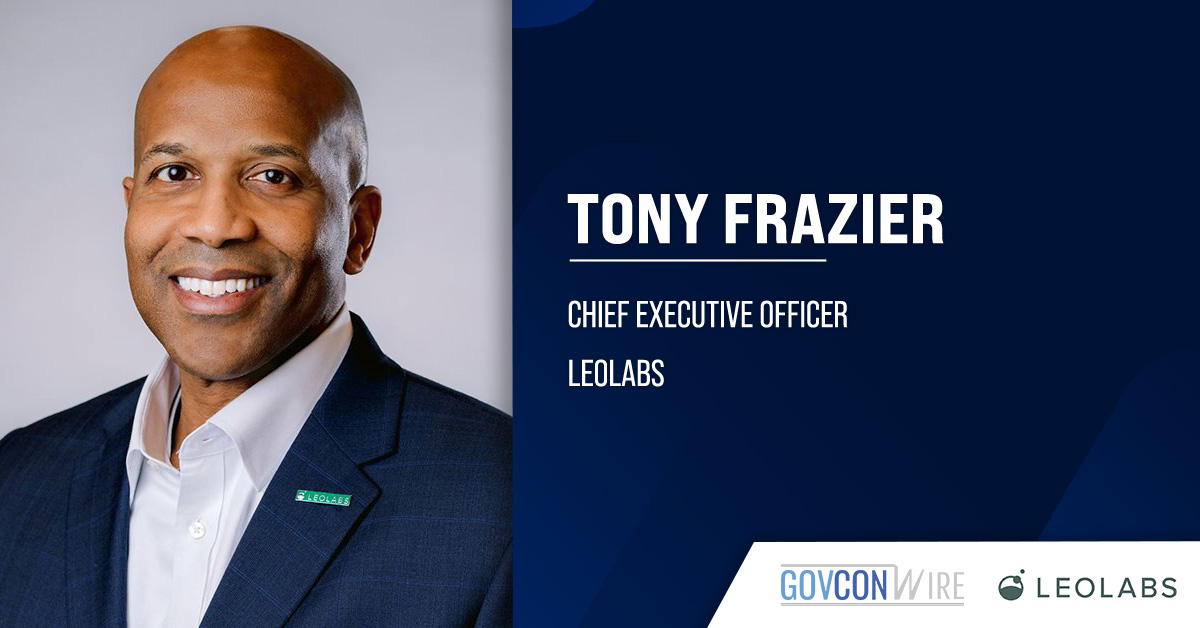
Tony Frazier, LeoLabs CEO and a six-time Wash100 Award winner, said FishEye’s background in software development and integration for U.S. missile defense systems will help LeoLabs tailor its existing radars for missile warning and tracking. He said the goal is to “move those capabilities into operational use quickly.”
“Together, we can deliver the sensing capabilities U.S. and Allied customers need at the speed and scale the mission demands,” Frazier added.
What Does FishEye Bring to LeoLabs?
For nearly three decades, FishEye has supported radars the government owns and operates for missile defense and space domain awareness. Its work covers field testing, software development and systems engineering.
FishEye President Bob Chisholm said joining LeoLabs lets his team “apply its deep mission knowledge to a new generation of radar systems.”
What Other Moves Has LeoLabs Made?
The FishEye acquisition builds on a run of recent government work and radar deployments for LeoLabs. In October, Space Systems Command named LeoLabs one of six companies under the Space Force’s Commercial Augmentation Space Reserve program.
LeoLabs fielded its first Scout-S transportable radar in the Indo-Pacific in June as part of an experiment at U.S. Indo-Pacific Command’s Valiant Shield 2026 exercise. The radar fits in a 20-foot container, can detect an object as low as 230 kilometers, and can be moved by land, sea or air. The company plans future Scout variants for missile warning and tracking.
In April, LeoLabs introduced Delta, an artificial intelligence-powered threat detection and characterization system for national security missions, replacing its LeoGuard offering.
The company took part in Golden Dome demonstrations in September 2025, tracking orbital maneuvers and hypersonic reentry. In December 2025, the Commerce Department’s Office of Space Commerce and the Space Force’s Joint Commercial Operations cell licensed LeoLabs’ catalog of nearly 25,000 tracked objects in low Earth orbit.
LeoLabs holds a $60 million SpaceWERX Strategic Funding Increase award to deploy a Seeker-class radar in the Indo-Pacific by 2027.