
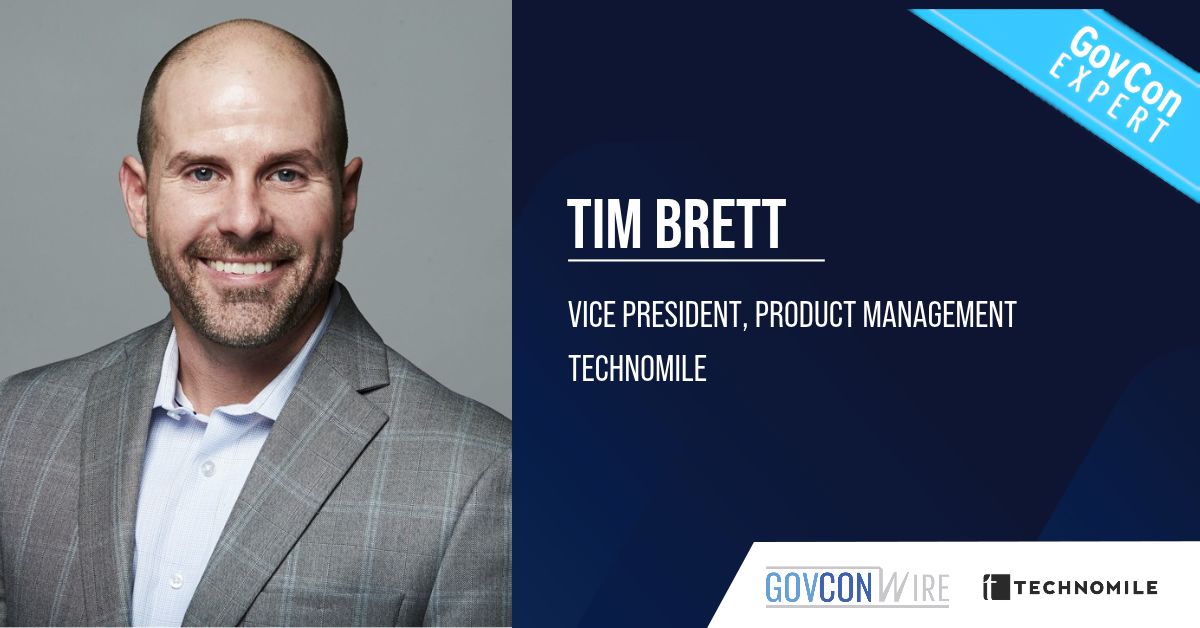

By Timothy Brett, VP of Product Management at TechnoMile and a GovCon Expert
Over the past year, federal agencies have accelerated a fundamental shift in how they acquire technology and professional services. The launch of NASA’s Space and Network Enterprise-Wide Procurement VI, or SEWP VI, contract and the Army’s Marketplace for the Acquisition of Professional Services or MAPS, vehicle reflects more than a preference for new contract vehicles. Together, they signal a broader evolution in federal acquisition strategy.
For years, agencies often purchased products, services and support through separate contracting channels. Today, acquisition policy is focused on enterprise-wide solutions that integrate technology, services, cybersecurity, data and mission support into cohesive outcomes. While SEWP VI and MAPS serve different markets, both prioritize scalability, interoperability and mission execution over standalone offerings.

Executive Order 14240 and broader General Services Administration consolidation initiatives frame this evolution as a way to reduce duplication, increase efficiency and strengthen government buying power. But the implications extend beyond procurement reform. They signal a future in which agencies evaluate vendors less as individual product providers and more as partners capable of delivering integrated mission capabilities.
For technology companies, the question is no longer simply whether a product solves a problem. Today, the question is how that product fits into a larger ecosystem of platforms, data, services and mission outcomes.
As SEWP VI, MAPS and other consolidated vehicles change how agencies buy technology, the Potomac Officers Club’s 2027 GovCon Executive Leadership Summit on Feb. 25 will bring C-suite leaders together to discuss strategy for competing in a more integrated acquisition landscape. Save your seat now!
Agencies Are Buying Capabilities, Not Products
For decades, federal technology acquisitions were often organized around distinct categories of products and services. The Army’s Information Technology Enterprise Solutions, or ITES, program is a good example. Requirements were segmented across vehicles such as s ITES-SW for software, ITES-3H for hardware and ITES-3S for services. While these contracts supported related mission needs, they were competed, managed and evaluated through largely separate acquisition channels. Federal agencies frequently took a similar approach across the technology landscape, purchasing products, services and support through different vehicles even when they ultimately contributed to the same mission outcome.
That approach is changing.
The Army’s transition from separate ITES vehicles to MAPS illustrates a broader trend occurring across federal acquisition. Agencies are moving away from managing fragmented portfolios of contracts and towards acquisition strategies designed to deliver integrated mission capabilities.
Today’s mission challenges, whether related to cybersecurity, digital modernization, data management, or operational readiness, rarely fit neatly into a single product category. Agencies often require solutions that combine technology, expertise and ongoing support. As a result, acquisition strategies are evolving to emphasize end-to-end capabilities rather than individual offerings.
The structure of both SEWP VI and MAPS reflects this shift. Rather than focusing on narrow technology components, these vehicles are designed to support broader mission requirements that may span software, cloud services, cybersecurity, engineering, analytics, operations and program support. The objective is not simply to acquire technology faster. It is to deliver outcomes more effectively.
For product leaders, this represents an important change in how federal buyers evaluate value. A product’s feature set remains important, but features alone are rarely sufficient. Agencies now evaluate how a solution integrates with existing environments, supports mission workflows, reduces operational complexity and contributes to measurable outcomes.
In other words, the competitive advantage is shifting from what a product does individually to how effectively it enables a larger mission capability.
Interoperability Has Become a Strategic Requirement
As agencies consolidate contracts and pursue broader mission outcomes, interoperability is evolving from a technical consideration into a strategic requirement. Products are no longer evaluated solely on functionality. They are evaluated based on how effectively they connect with existing systems, exchange data, support security requirements and integrate within larger mission ecosystems.
This shift reflects the reality of modern government operations. Agencies rarely operate within a single platform or technology stack. Mission execution often depends on data moving across multiple systems, organizations and security domains. Whether supporting cybersecurity operations, workforce management, logistics, financial management, or digital service delivery, technology solutions must work seamlessly alongside other products and services.
The implications for product providers are significant. Product roadmaps can no longer focus exclusively on new features and capabilities. Equal attention must be given to APIs, data standards, cloud integration, cybersecurity compliance and user experience across interconnected environments. Solutions that create friction for users or require extensive customization to integrate with other systems may find themselves at a disadvantage, regardless of how innovative their individual capabilities may be.
SEWP VI and MAPS both reinforce this direction. While they address different acquisition needs, each provides access to a broad ecosystem of technologies and services that must ultimately work together to achieve mission objectives. Agencies are no longer acquiring individual capabilities in isolation. They are assembling interconnected environments where data, applications, services and users must operate seamlessly to support operational outcomes.
For product leaders, interoperability is no longer a technical feature. It has become a strategic differentiator that influences adoption, scalability, mission impact and long-term relevance within the federal market.
The Rise of Platform Thinking in Federal Markets
As agencies prioritize integrated capabilities and mission outcomes, platform thinking is becoming a defining characteristic of successful federal technology strategies. Agencies are no longer looking for isolated tools that solve individual problems. They are seeking solutions that can serve as foundational components within a broader operational ecosystem.
This evolution is driven by both mission demands and acquisition realities. Agencies must manage growing volumes of data, support more distributed workforces, strengthen cybersecurity and accelerate modernization efforts, often within constrained budgets and complex technology environments. Addressing these challenges requires more than a collection of disconnected products. It requires platforms that can unify data, workflows, users and decision-making processes across the organization.
For product leaders, this represents a meaningful shift in how value is created and communicated. Historically, product differentiation is often centered on features and functionality. Today, differentiation often comes from a platform’s ability to connect systems, support extensibility, accommodate evolving mission requirements and enable additional capabilities over time.
This does not mean every company must become a platform provider. However, every product should be designed with platform principles in mind. Open integration frameworks, scalable architectures, robust partner ecosystems, extensibility and flexible deployment models are becoming essential components of long-term product success.
The broader acquisition trends reflected in SEWP VI and MAPS reinforce this shift. As agencies pursue enterprise-wide modernization strategies, they favor solutions that can adapt to changing requirements while serving as part of a larger operational framework. Technology investments are expected to deliver immediate value while also creating a foundation for future innovation.
For federal technology providers, the lesson is clear. The most successful products will not simply address today’s requirements. They will help agencies build the connected, resilient and adaptable environments needed to support tomorrow’s missions.
What This Means for Technology Providers
Success will depend not only on what a product does, but how it connects to adjacent technologies and mission workflows.
For technology providers serving the federal market, these acquisition trends require a broader view of product strategy and competitive positioning. Success is becoming less dependent on delivering a best-of-breed capability in a single area and more dependent on demonstrating how that capability contributes to a larger mission outcome.
This requires a shift in mindset. Product teams must think beyond feature development and consider how their solutions integrate within an interconnected technology ecosystem. Agencies are looking for solutions that can accelerate decision-making, improve operational efficiency, strengthen security and support mission execution across organizational boundaries. Vendors that can clearly articulate their role within that broader ecosystem will be better positioned to compete.
The contract vehicle may determine how agencies buy, but product strategy determines which solutions become part of the long-term mission environment.
Partnerships will also become a critical component of product strategy. As agencies seek integrated solutions, technology providers must identify opportunities to complement, rather than compete with other platforms and services. Strong integration partnerships, shared data strategies and collaborative solution development are likely to become greater sources of differentiation than standalone product enhancements.
At the same time, providers should expect evaluation criteria to continue evolving. Technical capabilities will remain important, but agencies are placing greater emphasis on factors such as interoperability, scalability, cybersecurity, implementation risk and long-term adaptability. Products that can demonstrate measurable contributions to mission outcomes will hold an advantage over those that focus primarily on technical specifications.
Perhaps most importantly, technology providers should view acquisition trends as market signals. Vehicles such as SEWP VI and MAPS do more than create new pathways for procurement. They provide insight into how agencies are thinking about modernization, operational efficiency and mission delivery. Organizations that align their product strategy with those broader priorities will be better equipped to meet evolving customer expectations and compete in a more integrated federal technology landscape.
Looking Beyond the Contract Vehicle
SEWP VI and MAPS may be different acquisition vehicles, but they reflect the same underlying trend: federal agencies are seeking integrated solutions capable of delivering measurable mission outcomes. For product leaders, the lesson is clear. Success in the federal market will depend on building technologies that fit seamlessly within broader ecosystems, support enterprise objectives and help agencies solve complex challenges rather than isolated problems. The organizations that thrive will be those that design for integration, interoperability and adaptability from the outset.