

- Book-to-bill came in at 0.6 for the quarter and 0.8 on a trailing 12-month basis
- Backlog stood at $22.1 billion, with $3.8 billion funded
- Project ORBIT is targeting roughly $150 million in annual run-rate savings
SAIC reported $1.88 billion in second quarter fiscal 2027 revenue, up 6 percent year over year, and raised its full-year guidance for revenue, adjusted EBITDA, margin and earnings per share.
Organic growth reached 5.3 percent. The SilverEdge Government Solutions acquisition contributed $20 million to the quarter, SAIC said Monday.
Net income fell 20 percent to $102 million. Adjusted EBITDA was $193 million, or 10.3 percent of revenue, and adjusted diluted earnings per share came to $3.01, down from $3.63 a year earlier.

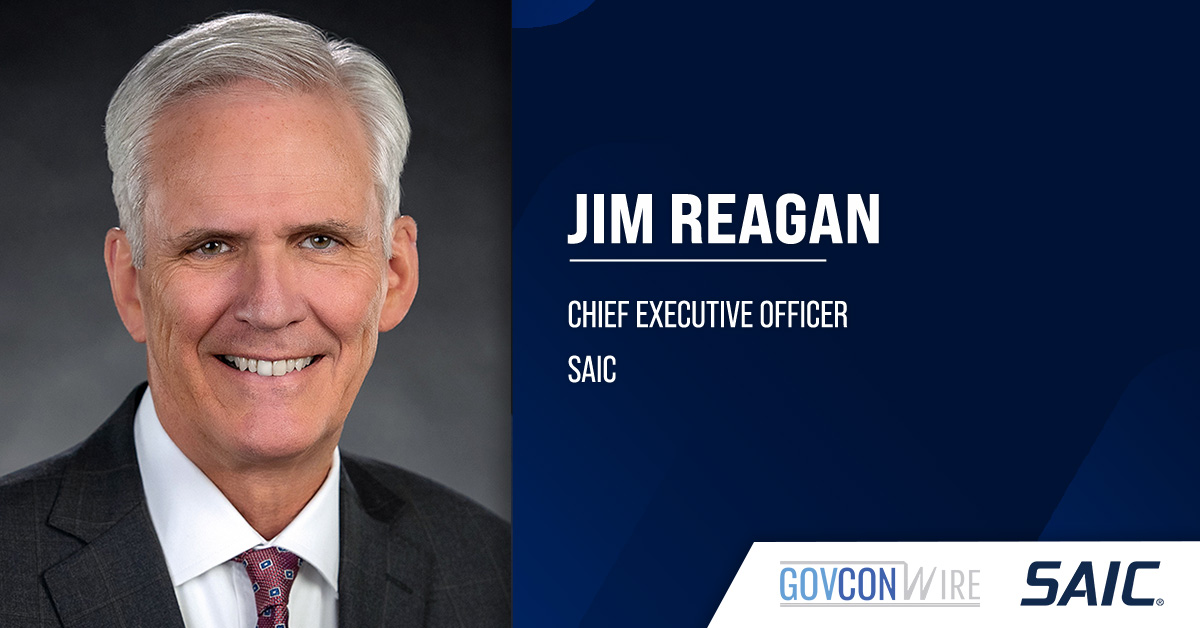
“These results reflect our focus on operational excellence and our commitment to the targets we set for the year,” said Jim Reagan, CEO of SAIC and a five-time Wash100 Award winner. “We are raising our guidance to reflect our strong year-to-date performance, and we are transforming our enterprise to support our customers’ most critical missions, drive long-term growth and margin expansion, while continuing to invest in strengthening our capabilities.”
SAIC is a sponsor of the Potomac Officers Club’s 2026 Intel Summit, set for Sept. 2. Keynotes will come from NSA Deputy Director Tim Kosiba, DHS Undersecretary for Intelligence and Analysis Matthew Kozma, and NRO SIGINT Directorate Chief Architect Ryan Lewis, with panels covering OSINT in counterespionage, agentic AI at the decision edge and data foundations for mission AI. Register now to hear from intelligence community leaders.
Why Did SAIC’s Q2 FY 2027 Bookings Fall?
Net bookings totaled roughly $1.2 billion, producing a book-to-bill ratio of 0.6 for the quarter and 0.8 over the trailing 12 months.
During SAIC’s Q2 2027 earnings call, Chief Financial Officer Prabu Natarajan said the figure would have landed closer to 1.0 had a large recompete award not slipped, arriving two days after the quarter closed. He attributed the delay to procurement offices working through new guidelines, including fixed-price directives.
Backlog stood at approximately $22.1 billion at quarter’s end, of which $3.8 billion was funded.
In the same call, Reagan said the company’s recompete win rate topped 90 percent during the quarter, with new business win rates within its target range.
Which Contracts Did SAIC Book?
The company won a five-year recompete worth about $400 million to support an intelligence agency, covering systems engineering, technical integration and mission support for ground-based programs.
An Army award worth roughly $330 million over five years covers engineering and professional services for system-of-systems and modeling and simulation work. A five-year Navy contract worth about $130 million supports acquisition, development and operational testing of airborne electronic warfare systems.
After the quarter closed, SAIC won a five-year recompete worth approximately $740 million with the Department of Homeland Security, covering operations and maintenance of Customs and Border Protection systems that assess security risk from travelers and cargo.
The company also took a position on the Missile and Space Intelligence Center’s Contract Operations for Missile Evaluation and Testing multiple-award IDIQ, which has an estimated value of $14 billion. SAIC does not record backlog from multiple-award IDIQ vehicles until task orders are issued.
What Is Project ORBIT?
SAIC’s internal restructuring effort, called Optimizing Resources for a Better Impact Tomorrow, has entered the implementation phase. SAIC expects roughly $150 million in annual run-rate savings by the end of a three-year period.
About two-thirds of that, or $100 million, will go back into the business, according to Natarajan. The remainder will support margin expansion.
SAIC now expects fiscal 2027 revenue of between $7.2 billion and $7.3 billion, up from a prior range of $7 billion to $7.2 billion. Adjusted EBITDA guidance rose to between $750 million and $755 million, implying a margin of 10.3 to 10.5 percent. The company raised its adjusted diluted EPS guidance to a range of $10.65 to $10.75. Free cash flow guidance remains above $600 million.