

- Leidos lands a $2.7B Army Dark Eagle hypersonic weapons production contract
- Combined TPS and CHGB effort aims to speed deployment
- The Navy has its own hypersonic weapons program called Conventional Prompt Strike
- Dark Eagle and CPS use the same glide body design
Leidos has secured a $2.7 billion contract from the U.S. Army to help transition key programs from prototyping to production in support of the service’s next-generation long-range hypersonic weapon, known as Dark Eagle.
What Does the Contract Cover?
The Reston, Virginia-based company said Tuesday that the award consolidates work under the Thermal Protection Shield, or TPS, and Common Hypersonic Glide Body, or CHGB, programs to simplify development efforts and fast-track delivery timelines.
CHGB is an essential component of the Dark Eagle hypersonic missile. Based on the Alternate Re-Entry System, which the Army co-developed with Sandia National Laboratories, the payload uses a booster rocket motor to travel at Mach 5 or higher. The Department of War said CHGB is being developed to be maneuverable and harder to intercept.
Meanwhile, TPS is the technology that protects the hypersonic weapon from the extreme heat and pressure generated during flight.
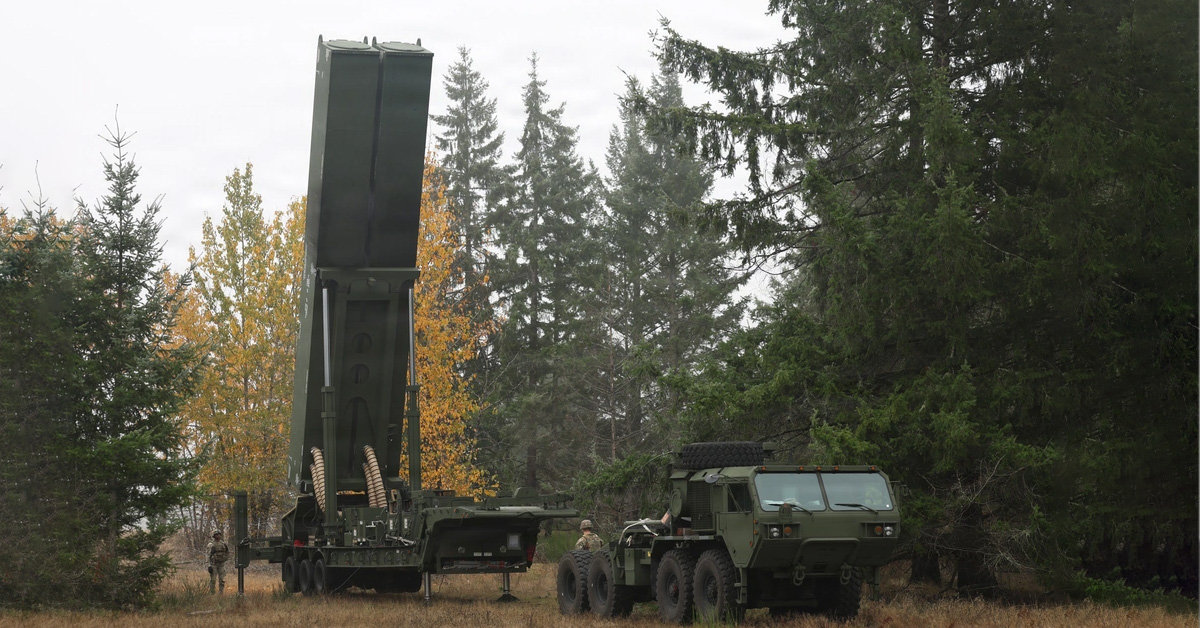
The latest award builds on Leidos subsidiary Dynetics’ prior hypersonic work with the Army:
- 2024 – Dynetics received a $670.5 million contract covering both CHGB and TPS efforts through 2029.
- 2023 – the company secured a $428.3 million contract modification to continue prototype development work on the CHGB system.
- 2021 – the company also won a $478.6 million contract to develop the TPS prototype designed to protect hypersonic missiles from extreme heat during flight.
How Will Leidos Support Hypersonic Modernization?
This integrated approach is designed to enhance production efficiency, reduce delays and strengthen the supply chain supporting hypersonic weapon components. Leidos said that, under the production contract, the company will leverage its expertise in guidance systems, sensors and precision munitions integration to support the Army’s hypersonic modernization efforts.
“This contract is a major step forward in delivering hypersonic capabilities to the warfighter at speed,” said Cindy Gruensfelder, president of the defense sector at Leidos. “Our team is committed to supporting the Army and Navy in producing this critical operational capability,” added the 2026 Wash100 Award winner.
What Does the Award Mean for GovCon?
The transition of the CHGB and TPS programs from prototype to production signals that the Army’s hypersonics program is advancing. For government contractors, production usually means longer-term work for primes and suppliers.
Dynetics is part of the Lockheed Martin-led team that won a $347 million contract in 2019 to build and integrate a ground-based hypersonic strike weapon system prototype for the U.S. Army. The team also included Verity Integrated Systems, Martinez & Turek, Integration Innovation and Penta Research.
Northrop Grumman, General Dynamics, Raytheon and Moog are also working on the program as subcontractors, Army-Technology reported.
How Does This Award Align With NorthStar 2030?
The award supports the company’s NorthStar 2030 strategy by focusing on defense innovation and advanced military technologies, including hypersonic and precision strike capabilities. Leidos is positioning itself to support the Department of War’s future military requirements and integrated air and missile defense architecture.
What Is the Navy’s Conventional Prompt Strike?
The Navy is running its own hypersonic program that utilizes the same glide body design as Dark Eagle. Called the Conventional Prompt Strike, or CPS, the all-up-round missile is intended for deployment on Zumwalt-class destroyers and Virginia-class submarines.
The Navy began testing a CPS prototype in June 2022. The service initially planned to transition the weapon to rapid fielding aboard the Zumwalt-class destroyer in fiscal 2025 and achieve initial operational capability aboard the Virginia-class submarine in fiscal 2029.
However, a recent Government Accountability Office report revealed that modernization of the USS Zumwalt, the first ship to host the CPS missile, is behind schedule. The program is now scheduled to begin flight tests aboard USS Zumwalt in 2027, a two-year delay.
When Did the Army & Navy Conduct a Hypersonic Missile Test?
In March, the U.S. Army Portfolio Acquisition Executive Fires and the U.S. Navy PEO Strategic Systems Programs launched a common hypersonic missile from Cape Canaveral Space Force Station in Florida. The services plan to field a common hypersonic missile on sea-based platforms.