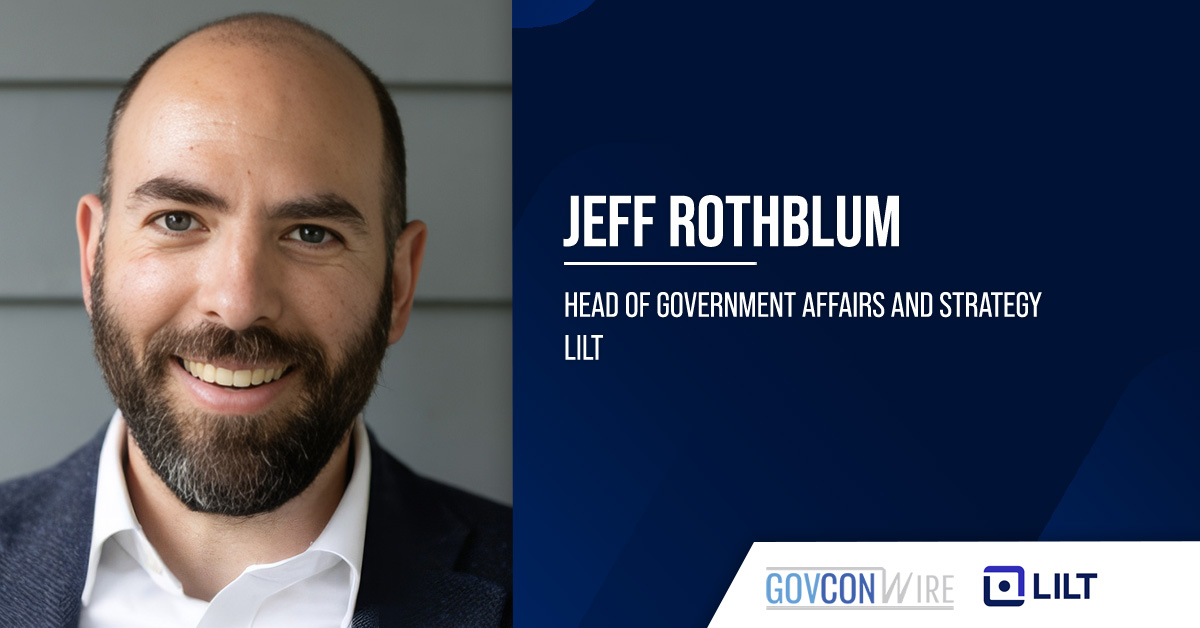

Jeff Rothblum, head of government affairs and strategy at LILT, said artificial intelligence is critical to helping government agencies meet growing demand for multilingual translation across national security, public services and other mission-critical government missions.
“Governments face a persistent shortage of critical-language linguists, compounded by the limited number who can obtain security clearances or have subject-matter expertise in fields such as medicine, hypersonic missiles or nuclear energy,” Rothblum wrote in an article published on Carahsoft.com. “Artificial intelligence is the only way to keep pace with the rapidly growing translation demand.”
How Does AI Improve Translation Speed & Accuracy?
Rothblum said AI-driven multilingual platforms, including a LILT-developed tool, could help accelerate translation timelines while maintaining accuracy through human oversight.
He noted that AI systems could rapidly translate text, video and audio and adapt outputs based on mission context and subject-matter requirements.
According to Rothblum, LILT uses a human-in-the-loop model that allows linguists to review and refine AI-generated translations, improving quality while enabling continuous model training.
He added that agencies using the platform have reduced translation timelines from months to days and can now produce multilingual outputs simultaneously.
What Is LILT Converse?
Rothblum said AI could enable agencies to scale translation efforts across multiple languages without relying solely on limited human resources.
He highlighted LILT Converse, a voice-to-voice capability that supports real-time communication across languages, even in low-connectivity environments.
“Converse allows military officials on a ship in the middle of the ocean to talk instantly with our allies or first responders in a disaster zone to communicate with their colleagues when the internet is down,” he noted.
What Is the Role of Agentic AI in Translation Workflows?
Rothblum said agentic AI could help enhance translation operations by automating routine tasks and orchestrating workflows.
“Employees will set the parameters for how the AI agents work, and those agents will only need to engage with users when they have a question or concern. This saves money and allows people to do the most challenging and most interesting work,” he wrote.
“Producing content at scale in multiple languages is essential to a wide variety of government activities in our increasingly complex world,” Rothblum concluded.