
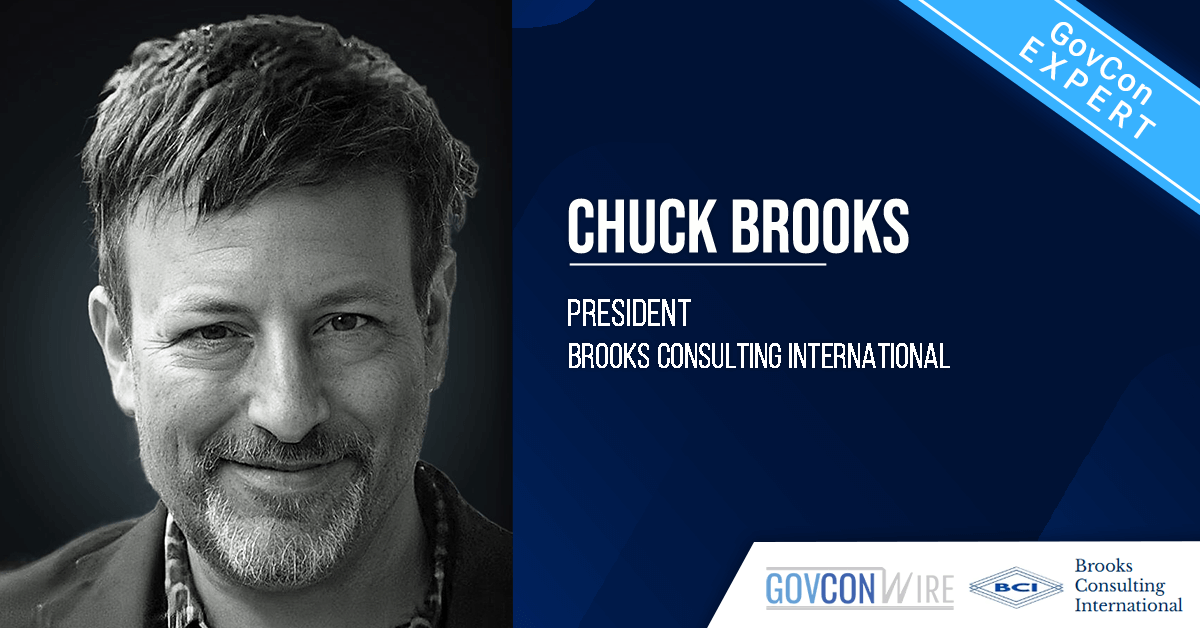

Chuck Brooks is the president of Brooks Consulting International and one of Executive Mosaic’s GovCon Experts.
AI is altering the threat landscape by enabling adversaries to see more of the grid, comprehend its weaknesses and devise attack plans more quickly than conventional defenses can react. The energy grid is growing more sophisticated, networked and reliant on artificial intelligence. Increased efficiency, predictive maintenance, better energy distribution and the capacity to handle increasingly complicated power demands are all promised by these developments. However, they are also establishing a brand-new, possibly hazardous cybersecurity environment.
I have written extensively about critical infrastructure vulnerabilities, particularly in relation to the convergence of information technology, artificial intelligence, operational technology, or OT, and the Internet of Things, or IoT. One of my concerns for a long time has been the inability to distinguish between the security of the energy grid and the security of the digital networks, devices and communications systems that are connected to it. The urgency of that issue is growing.

Adversaries are able to map interconnected systems, conduct surveillance, find vulnerabilities and create complex exploitation strategies thanks to artificial intelligence. AI-assisted reconnaissance and automated cyber operations are increasingly able to accomplish tasks that previously required specialized technical knowledge, significant resources and a significant amount of time.
Hackers trying to break into a utility’s corporate network are not the only ones who pose a threat. It is the capacity of highly skilled adversaries to comprehend the larger digital ecosystem that surrounds the grid, pinpoint its weakest links and possibly exploit those links to interfere with actual operations. AI is altering the threat landscape by enabling adversaries to see more of the grid, comprehend its weaknesses and devise attack plans more quickly than conventional defenses can react.
As adversaries use AI to target the energy grid and defenders turn to AI to protect it, the Potomac Officers Club’s 2027 Artificial Intelligence Summit on March 18 will explore securing critical infrastructure in the AI era. Save your seat now!
The Increasing Digital Attack Surface of the Grid
Power plants, transmission lines, substations and distribution networks are no longer the only components of the modern electric grid. This cyber-physical ecosystem is intricate. Nearly every layer of the energy infrastructure is now connected by digital technologies. Utilities are assisted in monitoring and controlling the production and distribution of electricity by intelligent electronic devices, smart meters, sensors, automated grid-management platforms, industrial control systems, SCADA systems, PLCs and intelligent electronic devices.
An additional level of complexity is introduced by the switch to renewable energy. Additional linked devices and control systems are introduced by solar installations, wind farms, battery storage, distributed energy resources, infrastructure for charging electric vehicles and microgrids. Although these technologies increase efficiency, a potential vulnerability may be introduced by each connection. In addition, the grid relies on third-party vendors, software providers, cloud services, telecommunications networks and remote maintenance systems. An adversary may be able to gain indirect access to a more vulnerable system if one of these interconnected environments is compromised.
The fact that many energy operators continue to use outdated equipment that was created decades ago, when connectivity and remote access were not major design factors, makes this especially troubling. As a result, the infrastructure is becoming more interconnected, making it possible for one organization’s security to rely on that of dozens or even hundreds of other organizations.
AI-Powered Surveillance: The Emerging Risk of Reconnaissance
The use of AI to carry out advanced surveillance and reconnaissance against energy infrastructure is one of the biggest new risks. Historically, adversaries have used human intelligence, network scanning, open-source research and extended observation to obtain intelligence about critical infrastructure. AI significantly increases the potential scope and effectiveness of those endeavors.
Large amounts of publicly accessible data can be processed by generative AI and autonomous agents, which can also create comprehensive intelligence profiles and determine connections between infrastructure and organizations. Think about what an adversary could discover by merging data from publicly available network information, employee profiles, job postings, infrastructure maps, satellite imagery, equipment specifications, vendor portals, public utility documents and regulatory filings.
These sources might not provide much information on their own. When combined and examined by AI, they could offer a far more comprehensive view of the technology environment, suppliers, remote-access dependencies and possible vulnerabilities of an energy operator.
AI can also be used to find patterns in operational data, correlate past outages, identify equipment dependencies and rank infrastructure components or organizations for additional research. This represents a novel aspect of digital surveillance. Initial network penetration is not always necessary. Before attempting an intrusion, an adversary might be able to gather useful intelligence. Combining AI-assisted reconnaissance with ongoing access to cloud, telecom, and other third-party networks raises even more concerns.
This is important, as the Volt Typhoon campaign proved. China-affiliated actors attempted to pre-position themselves within vital infrastructure networks, possibly creating access that could be used during a future geopolitical crisis, according to warnings from U.S. government agencies. Such activity does not always aim to cause an immediate disruption. It might be to comprehend networks, keep access and maintain the capacity to act when it is strategically advantageous. This kind of preparation and reconnaissance could be made quicker, more thorough and harder to spot with AI.
The Alert Is Here: Industrial Controllers Are the Target of AI-Generated Exploits
AI-enabled threats to operational technology are real, as evidenced by recent government warnings. Cyber actors were conducting targeted reconnaissance and creating AI-generated exploitation scripts against Siemens S7 programmable logic controllers used in U.S. critical infrastructure, according to a cybersecurity advisory released by the National Security Agency and partner agencies in August 2026. See: AI-generated exploitation scripts targeting Siemens PLCs in U.S. critical infrastructure.
The scripts were passed off as genuine monitoring instruments. Energy production and distribution, manufacturing, water and wastewater treatment, chemical processing and other vital industries were among the impacted sectors. The agencies issued a warning that improperly protected controllers could be exploited to disrupt industrial processes, damage equipment, result in safety incidents and have cascading effects on interconnected systems.
Since PLCs are directly involved in managing physical processes, this is a significant development. An IT security incident is not the same as a compromise of an inadequately secured controller. Physical operations may be impacted, depending on the attack and the system. The caution also demonstrates how AI can reduce the technical obstacles to creating tools that communicate with industrial systems.
CISA, the FBI and other government partners revised their advisory in July 2026 regarding cyber actors with ties to Iran that target internet-connected programmable logic controllers. Siemens, Schneider Electric and Rockwell Automation were added to the list of manufacturers targeted by the revised warning. These changes show that adversaries are becoming more and more interested in the operational technology supporting vital services. Energy executives and utility security teams should pay special attention to CISA’s July 2026 update and NSA’s August 2026 advisory on AI-generated PLC exploitation. See: Updated warning about Iranian-affiliated actors targeting PLCs, including Rockwell, Schneider Electric and Siemens equipment.
The Advantage of AI-Speed for Adversaries
Reconnaissance, weaponization, delivery, exploitation, installation, command and control and actions against a target are all part of the traditional cyberattack lifecycle. AI is starting to quicken each step. An adversary with AI capabilities can automatically analyze exposed systems, find possible vulnerabilities, create malicious scripts and assess different strategies. Additionally, autonomous agents might be able to manage several tasks with little help from humans.
The use of AI tools to detect weaknesses in energy systems and automate parts of attack pathways was detailed in a September 2026 Reuters investigation into AI-enhanced cyberattacks against energy companies. A significant issue for smaller utilities was also brought to light by the reporting: many do not have the staff and resources required to maintain sophisticated security monitoring around-the-clock. Given the quantity of smaller municipal and rural utilities that run vital infrastructure, this is especially concerning.
Patch management makes the issue worse. It is not always easy to update industrial control systems. Unexpected behavior in an industrial process could result from a software update that functions properly in a typical IT environment. To avoid interfering with the production or distribution of electricity, utilities must thoroughly test any changes. This leads to an imbalance. While defenders must make sure that remediation does not jeopardize operational safety or reliability, attackers can quickly look for vulnerabilities.
Additionally, AI is enabling adversaries to create more complex social engineering campaigns, take advantage of compromised identities and possibly migrate laterally from less sensitive networks to more critical environments. As a result, the window between vulnerability discovery and exploitation is getting smaller.
The Nexus of AI & Energy Creates New Vulnerabilities
Another aspect of this problem that needs more attention is the growing reliance on the energy grid due to the quick development of AI infrastructure. Big AI data centers need a lot of electricity, advanced cooling systems, backup power and increasingly intricate utility network connections. Power distribution systems, substations, high-voltage transformers, natural gas infrastructure, telecommunications and facility-level microgrids are all essential to their operations. Simultaneously, the grid is increasingly relying on artificial intelligence for forecasting, supply and demand balancing, predictive maintenance and automated operational decision-making. A two-way dependency is thus created.
While energy infrastructure is increasingly utilizing AI to function more effectively, AI necessitates a dependable and secure energy infrastructure. The repercussions could go beyond a single utility or data center if an adversary breaches the digital systems supporting either side of this relationship.
Data center operations, telecommunications, financial services, healthcare and other vital infrastructure could all be affected by an interruption in the distribution of electricity. On the other hand, interconnected energy operations may become unstable if systems supporting massive data center loads or distributed generation are compromised. A new strategic attack surface is thus created by the increasing convergence of AI and energy infrastructure.
I think the energy industry needs to focus more on operational resilience, predictive defense and continuous visibility when it comes to cybersecurity. In an environment where adversaries can take advantage of connections between IT networks, OT systems, cloud platforms, remote access services and third-party providers, traditional perimeter security is inadequate.
Priorities That Need to Be Addressed Now
First, utilities must have a thorough understanding of their digital infrastructure. What organizations are unable to see cannot be protected. Industrial controllers, sensors, smart meters, linked inverters, remote-access systems, software dependencies and third-party connections should all be included in asset inventories. Understanding what information about these assets is publicly available is becoming more crucial due to AI-assisted surveillance.
Second, operational technology environments must incorporate Zero Trust. Industrial system access should be strictly regulated, regularly verified and limited in accordance with operational needs. Network segmentation should stop a corporate IT environment compromise from opening the door to vital control systems.
Third, utilities need to improve their anomaly detection and monitoring. Unusual device behavior, unauthorized controller configuration changes, network traffic anomalies and suspicious activity in various industrial settings can all be detected with AI. In situations where sensitive operational equipment could be disrupted by active scanning, passive monitoring is especially crucial.
Fourth, supply-chain security needs to be given more attention. Managed service providers, software developers, telecom companies, equipment manufacturers and maintenance contractors are all essential to utilities. Secure updates, software provenance, hardware integrity and third-party access controls are crucial.
Fifth, grid architecture needs to be resilient. When individual components are compromised, utilities can continue to operate with the aid of redundant communications, backup power, microgrids, geographically dispersed capabilities and proven recovery techniques. Anticipating, enduring, absorbing, recovering from and adjusting to disruptions should be the goal.
Sixth, the AI systems that run or protect the grid need to be secure. Targets may include models, training data, identities, application interfaces and automated decision-making procedures. When AI affects operational decisions, human oversight and protections against data manipulation, model poisoning and incorrect automated actions are crucial.
Protecting the Grid With AI
AI can be one of the most crucial instruments for safeguarding energy infrastructure, even though it also poses new risks. Artificial Intelligence for Operationally Resilient Technologies and Systems, or AI-FORTS, is a project being advanced by the Department of Energy’s Office of Cybersecurity, Energy Security and Emergency Response, or CESER. The program’s three main goals are protecting energy infrastructure from AI-enabled threats, bolstering energy security with AI and protecting AI systems themselves. See: The three-pillar strategy for securing energy infrastructure from AI, with AI and securing AI itself.
DOE’s collaboration with Sandia National Laboratories on Communications and Cybersecurity for the Energy Edge, or C2E2, is a particularly encouraging example. The project, which was unveiled in September 2026, employs generative AI and large language models to assist utility operators in locating and identifying cyberthreats. According to DOE, the technology has shown 95% accuracy in identifying and locating threats in its reported testing and can cut some data-engineering tasks from roughly two months to a few hours. See: Sandia and CESER using AI to protect the grid.
Crucially, Sandia is also researching the possible consequences of AI hallucinations because false information could result in missed attacks or poor defensive choices in a critical infrastructure setting. These projects show how AI has the potential to improve situational awareness and speed up defensive action. This, in my opinion, is where the energy industry needs to make more significant investments: utilizing AI to detect threats earlier, comprehend the operational context of attacks and enhance the capacity to react before a cyber incident turn into a physical disruption.
Enhancing Public-Private Collaboration Is Crucial
Although a large portion of the infrastructure is run locally or privately, the security of the electric grid is a national security responsibility. Federal organizations that provide vital intelligence, technical advice and coordination include the FBI, DOE, CISA and NSA. The operational expertise and direct accountability for grid maintenance are held by utilities and energy firms. Better integration of these capabilities is required.
A more comprehensive public-private energy cybersecurity program that unites federal agencies, electric utilities, cybersecurity firms, equipment manufacturers, national laboratories, telecommunications companies and academic researchers is what I would support. This collaboration should identify systemic vulnerabilities, create defensive capabilities that can be shared throughout the industry, conduct coordinated AI-driven red-team exercises and simulate attacks against interconnected IT and OT environments.
Shared threat intelligence, standardized security architectures, reasonably priced monitoring tools and technical support should all be available to smaller utilities. A national infrastructure ecosystem shouldn’t be weakened by the security of a regional utility. Transitioning from dispersed information sharing to ongoing operational cooperation should be the goal.
Maintaining the Light in the Age of AI
One of the most important parts of the country’s infrastructure is the electrical grid. Almost every other vital industry is supported by its dependability, including manufacturing, financial services, telecommunications, transportation, healthcare and national defense. AI is changing how the grid is run, but it is also altering how adversaries can monitor and take advantage of it.
A more complex threat environment than utilities have historically faced is created by the combination of AI-generated reconnaissance, automated vulnerability discovery, industrial controller exploitation, increasingly interconnected energy systems and persistent access to third-party networks.
National security and cybersecurity are inextricably linked, and safeguarding vital infrastructure necessitates looking beyond specific networks to the larger systems that support them. As AI speeds up the merging of the digital and physical realms, this idea becomes even more crucial. To understand the ramifications, we shouldn’t wait for a significant grid disruption.
In addition to investing in AI-enabled defensive capabilities, strengthening public-private cooperation and integrating resilience into every layer of the energy ecosystem, the United States must make energy cybersecurity a sustained national priority. Protecting the electric grid in the AI era entails safeguarding not just the substations, transmission lines and power plants but also the digital intelligence, communications, software and linked networks that enable the grid to operate.
Whether or not we are able to stop every intrusion will not be the final indicator of our success. It will depend on our ability to recognize, stop and recover from attacks while maintaining operations.