

- Garrett Lee flags data leakage risks tied to agency AI use
- Lee wants human analysts to retain control of high-stakes security calls
- The 2026 Homeland Security Summit on Nov. 10 will explore AI, cyber talent and more
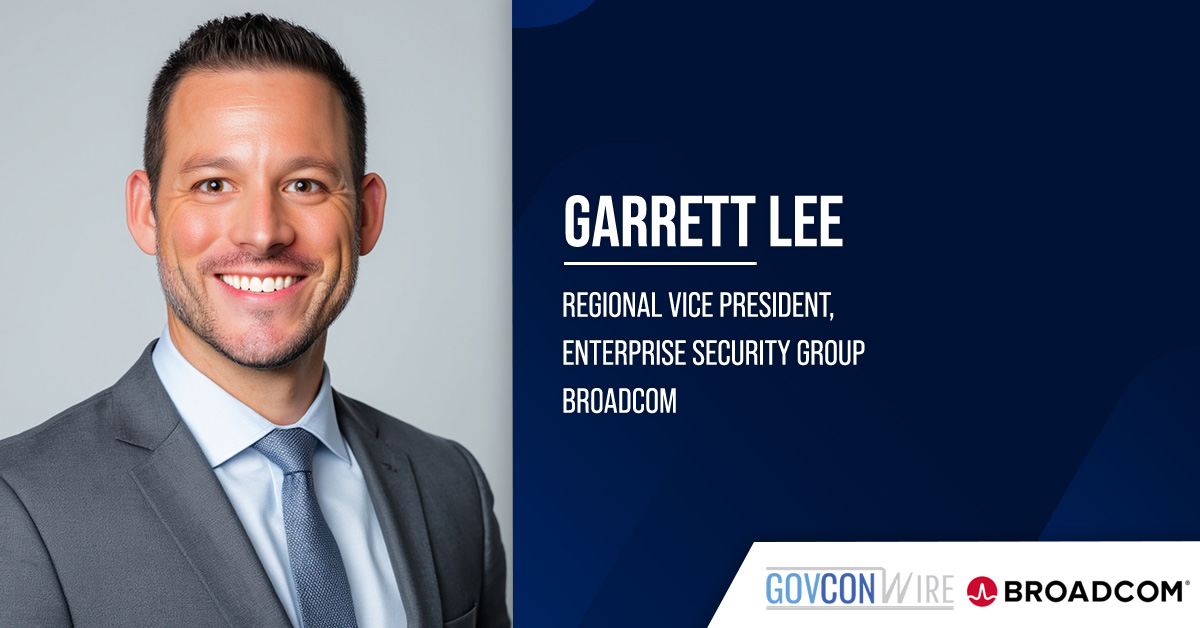
Garrett Lee, regional vice president of Broadcom‘s enterprise security group, said federal agencies can get greater value from artificial intelligence in cybersecurity by building AI into the security architectures and workflows they already operate instead of deploying it as a separate tool.

AI is reshaping how federal agencies detect and respond to cyberthreats, and its adoption is extending across the homeland security enterprise. Department of Homeland Security and industry leaders will gather at the Potomac Officers Club’s 2026 Homeland Security Summit on Tuesday, Nov. 10, to discuss how data and advanced technologies can help protect the nation’s borders and critical infrastructure. Panels will cover AI-enabled investigative intelligence, a federated DHS data and identity fabric, and DHS’ efforts to build cyber talent and field unmanned systems. Don’t miss your chance to hear directly from the leaders shaping homeland security’s tech future. Sign up now!
In an article published on Carahsoft.com, Lee discussed how AI is affecting both sides of the cyber landscape and described the governance practices agencies should adopt as they bring the technology into their defensive operations.
How Is AI Changing the Cyber Landscape for Agencies?
According to Lee, adversaries are using AI to accelerate their operations, automate attacks and evade detection, while agencies must protect complex environments where data moves across many locations. He noted that AI can also strengthen defenses by correlating security telemetry into incident summaries, spotting patterns across large datasets, prioritizing threats and automating routine investigative work. In his view, the technology works best when it augments human analysts rather than replaces them.
The Broadcom executive cautioned that AI adoption also creates new attack surfaces and new ways for sensitive information to leak. As a result, he said, agencies must use AI to improve their security posture and also protect the systems their AI tools run on.
How Should Agencies Approach AI Adoption in Cybersecurity?
Lee recommended that agencies build AI into their existing security architectures and workflows, supported by a security suite that unifies endpoint, network, user, domain and information-centric signals.
“It’s important to remember that AI is only as effective as the telemetry and context that are available to it,” he wrote.
He also stressed the need for governance, noting that high-stakes decisions should be easy to explain, subject to oversight and, when feasible, reversible.
“AI has the potential for great improvements but also for great risk. Therefore, governance and human oversight are essential,” the regional VP stated.
How Does Broadcom Support AI-Driven Cyber Defense?
Lee said Broadcom’s Symantec and Carbon Black portfolios provide visibility and enforcement across network, endpoint, information and web security.
“That level of control and visibility is vital because effective AI-driven defense depends on high-quality, high-fidelity telemetry and the ability to act on what that telemetry reveals,” he explained.
Carbon Black applies AI to threat detection, breach investigation and incident summaries, Lee added. The company has also trained private AI models on real-world attack kill chains to help agencies anticipate adversaries’ next moves. Symantec’s data loss prevention and secure web gateway offerings help agencies control what sensitive data reaches AI tools and what those tools produce, across cloud, on-premises and highly controlled environments.