
- Brian Snell said hard-to-use approved AI tools could encourage shadow AI
- Snell recommended data-centric policies that separate acceptable from risky AI use
- The 2027 Defense R&D Summit will explore trusted AI, data assurance and more
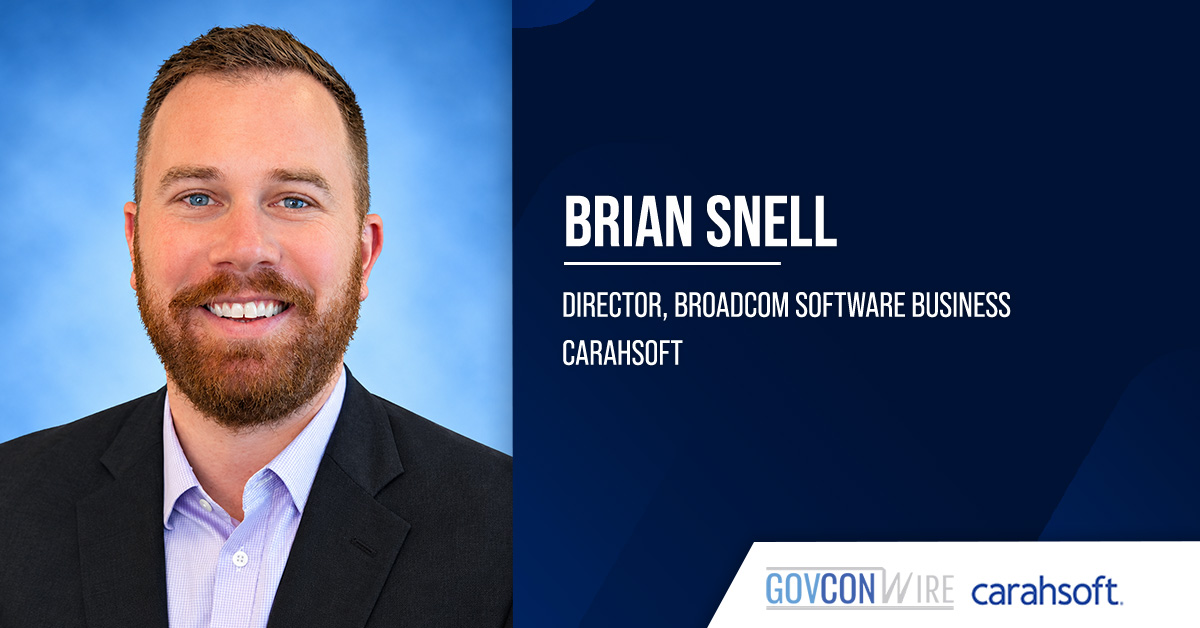
Brian Snell, director of the Broadcom software business at Carahsoft Technology, said government agencies should protect sensitive information wherever it travels, including into artificial intelligence tools, instead of restricting AI use across the board.

As employees feed more agency information into AI tools, assuring the data and models behind those tools has become a growing priority. The Potomac Officers Club’s 2027 Defense R&D Summit on Feb. 4 will bring together government and industry leaders to discuss trusted AI and autonomy, AI model and data assurance, supply chain visibility and more. Book your spot now to join the conversation.
In an article published on Carahsoft.com, Snell described how AI is reshaping data security priorities for agencies and explained how data-centric policies can support secure AI adoption.
How Is AI Changing Agencies’ Approach to Data Security?
According to Snell, agencies previously built much of their data protection strategy around web, email, cloud services, applications, endpoints and other well-defined channels. He noted that AI tools now allow employees to pull information from several sources into a single prompt and share it with an AI service within seconds.
As a result, agencies must shift their focus from securing the systems that store data to protecting the data itself as it moves, the Carahsoft executive said. He added that this requires visibility into which information is sensitive, how employees use it, where it goes and whether that use aligns with agency policy.
Why Shouldn’t Agencies Simply Block AI?
Snell cautioned against blocking AI at a high level, noting that employees who find approved AI tools difficult to use may turn to shadow AI and workarounds. He said offering approved AI capabilities paired with data protection controls provides employees with a productive option while giving security teams visibility and governance.
He recommended that agencies first determine which AI tools employees use, what information flows into them and where sensitive data may be exposed. Agencies can then apply data-centric policies that separate acceptable from risky behavior and tailor controls to the data, the user, the application and the mission, he explained.
“The goal shouldn’t be choosing between AI productivity and data security,” Snell wrote.
How Do Broadcom & Carahsoft Support Secure AI Adoption?
Snell said Broadcom’s Symantec data protection and web security offerings help agencies build guardrails into the security infrastructure their users and data already pass through. Symantec Data Loss Prevention identifies and protects sensitive information based on the data itself and applies policy as users interact with applications and AI services. Secure Web Gateway provides visibility and control over web-based activity, including access to generative AI services.
Together, the tools allow agencies to move past a simple allow-or-block model toward more granular control over how employees use AI, the director noted.
Carahsoft links Broadcom with resellers, integrators and other partners familiar with individual agency environments, according to Snell. He said that network could help agencies turn policy into architecture and implementation, then replicate successful deployments across programs and federated organizations.
“As AI adoption accelerates, the ability to scale proven security and governance approaches is vital for delivering mission outcomes,” he wrote.