

- Anduril commits $3.7 billion and the Navy up to $2.9 billion
- Arsenal-2 will produce Virginia-class components, starting with torpedo tubes
- The facility is expected to open in 2030
A $6.6 billion shipyard built to manufacture submarine components will rise at Sparrows Point in Baltimore County, Maryland, the Department of War said Tuesday.
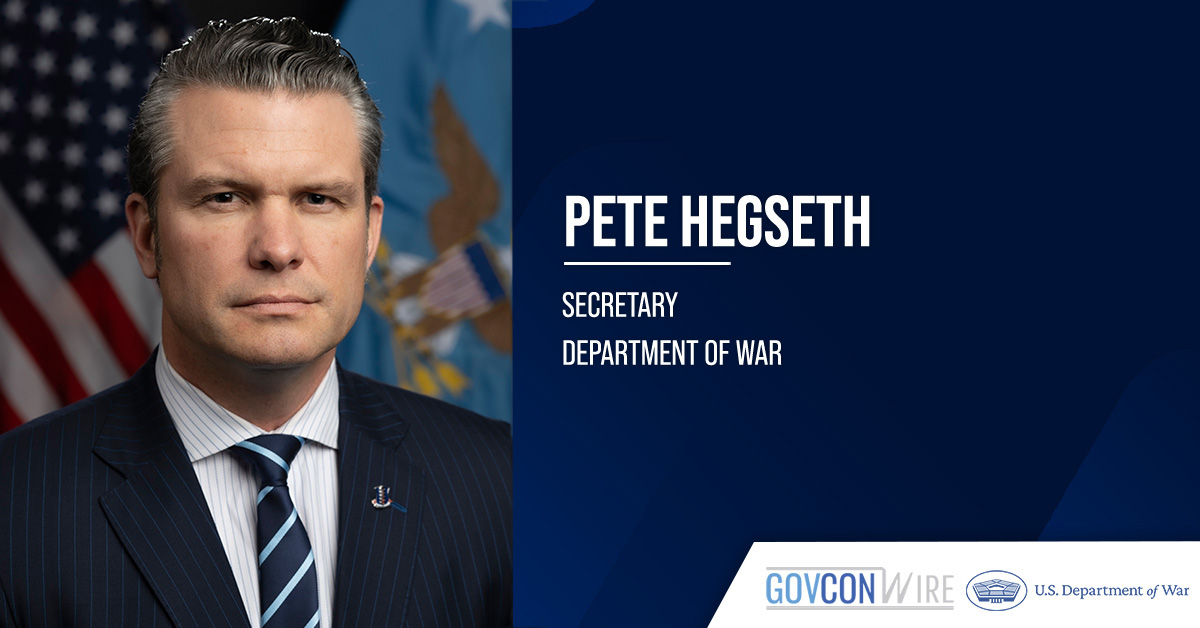
President Donald Trump and Secretary of War Pete Hegseth, a two-time Wash100 Award recipient, announced the development of the facility, named Arsenal-2, at a ceremony held at the future site. The yard will produce submarines, submarine components and autonomous underwater vessels.

Anduril Industries will build and operate the facility, investing $3.7 billion, with the Navy accounting for the remaining $2.9 billion through a contract with payments tied to demonstrated production outcomes, an arrangement the company said places the majority of execution risk on it rather than the government.
Trump said the project will create more than 3,100 jobs in Maryland and support another 11,000 nationwide.
Hegseth called the shipyard an integral part of the arsenal of freedom initiative to rebuild the military industrial base, and said the president has demanded speed, scale and urgency from the department since taking office.
Autonomous undersea systems and advanced manufacturing are reshaping naval acquisition priorities. The Potomac Officers Club will host the 2027 Defense R&D Summit on Feb. 4 at the Hilton McLean, where Department of War and national security technology officials will discuss unmanned systems, trusted AI and autonomy. Save your seat now.
Trump said American taxpayers will receive a 40 percent stake in the shipyard and raised the prospect of $21 billion in future purchases from the site.
What Production Gap Is Arsenal-2 Meant to Close?
The Navy needs to reach and exceed a cadence of one Columbia-class and two Virginia-class hulls per year, said Vice Adm. Rob Gaucher, director of submarine programs, noting that the enterprise currently delivers about half the tonnage required. Anduril cited domestic fleet requirements and AUKUS commitments as the drivers behind the needed growth.
Arsenal-2 will add up to 9 million production hours per year to the submarine supply chain, a 15 percent surge in total capacity, according to Gaucher. The yard will begin with precision torpedo tubes and impulse tanks before moving to complex rafted module assemblies, delivering them to General Dynamics Electric Boat and HII Newport News Shipbuilding for final assembly. Columbia-class and Virginia-class submarines are jointly built by the companies.
Gaucher said the new site’s position between the two prime yards, connected by sea, rail and road, lets them concentrate on work only they can perform: final module outfitting, nuclear reactor integration, assembly, testing and delivery.
What Will the Facility Include?
The yard will span more than 2 million square feet on a 187-acre site at Tradepoint Atlantic and will include a functional 1,200-foot graving dock, high-bay assembly halls and reconfigurable production lines, according to Anduril. ArsenalOS, the company’s industrial software platform, will connect fabrication workflows, material movement, inspection protocols and documentation in a single system.
Anduril expects to open the yard in 2030. Site preparation and permitting have already started, and construction is waiting on approvals.
The company is building a 160,000-square-foot facility in Orange County, California, to validate manufacturing methods and produce Virginia-class test assets and torpedo tubes ahead of the Maryland yard opening.
How Did Anduril Enter the Submarine Program?
Anduril CEO Brian Schimpf said the Navy approached the company more than two years ago, and that Anduril initially declined, since its work on autonomous aircraft, missiles and connecting software sat at a different order of complexity than a Virginia-class boat. He said the company then worked with Electric Boat and Newport News to identify where production constraints exist.
Arsenal-2 follows the approach Anduril used at Arsenal-1 near Columbus, Ohio. The company’s production network also includes a maritime factory at Quonset Point, Rhode Island; a Ghost Shark factory in Sydney; and a rocket motor facility in McHenry, Mississippi.
Acting Navy Secretary Hung Cao, a 2026 Wash100 awardee, said the project will bring automation, robotics and sensor systems into naval production. He noted that the Navy’s robotics and autonomous systems warfighting development center, which he established, serves as the service’s hub for carrying out the Department of War’s autonomous warfare priorities.
“As you know, the secretary of war announced last week the establishment of the Autonomous Warfare Command and the Navy’s ready to lead the charge in modernizing autonomous warfare,” Cao said during the ceremony.