

- Socure has raised its valuation to $5.2 billion in a new growth investment
- Fravity acquisition adds agentic capabilities to RiskOS
- Summit Partners led the investment
Socure has secured a strategic growth investment valuing the company at $5.2 billion and acquired Fravity, an agentic platform that automates fraud, risk and compliance operations.
What Are the Details of the Investment?
The company said Thursday Summit Partners led the investment, which includes both primary funding and a secondary tender offer for existing employees. Goldman Sachs Alternatives, Wells Fargo, Docusign and other investors also participated in the round.
The funding will support Socure’s global expansion and the integration of Fravity’s agent-building capabilities into RiskOS, the company’s identity and risk orchestration platform.
What Does the Fravity Acquisition Add to Socure’s Platform?
Fravity’s agent-building and operations capabilities will be delivered through RiskOS as RiskOS_Agents, a layer designed to automate the fraud, risk and compliance case work that currently requires manual review. Socure said the two companies already share a number of enterprise customers running both platforms in production.
RiskOS_Agents will draw on Socure’s Identity Graph and the roughly 10 billion decisions processed across its network each year, along with the underlying models and case outcomes tied to those decisions. Across existing deployments, Socure said Fravity has reduced cost per case by up to 80 percent, cut case resolution time by up to five times and lowered false positives by as much as 70 percent.
What Did Socure & Summit Partners Officials Say About the Deal?
Johnny Ayers, co-founder and CEO of Socure, said institutions cannot hire their way out of AI-driven financial crime and pointed to Fravity’s addition as completing a loop between agent-building tools, proprietary data and decisioning outcomes.
“Fravity, now as RiskOS_Agents, gives us the agent building and ontology layer, wired into the nucleus of RiskOS, on top of our proprietary data and models providing the complete loop to maximize customer decisioning accuracy,” Ayers added.
Andy Collins, managing director at Summit Partners, said identity verification is becoming the starting point for trust across an AI-driven economy and credited Socure’s data position and enterprise and government track record.
“Socure has built that capability with rigor — an AI-native architecture, a deep data advantage and documented outcomes for large enterprise and government customers,” Collins said.
Matt Hamilton, also a managing director at Summit Partners, pointed to Socure’s growth and execution at its current scale and said the firm is backing the company’s plan to combine identity, fraud and compliance workflows into a single platform.
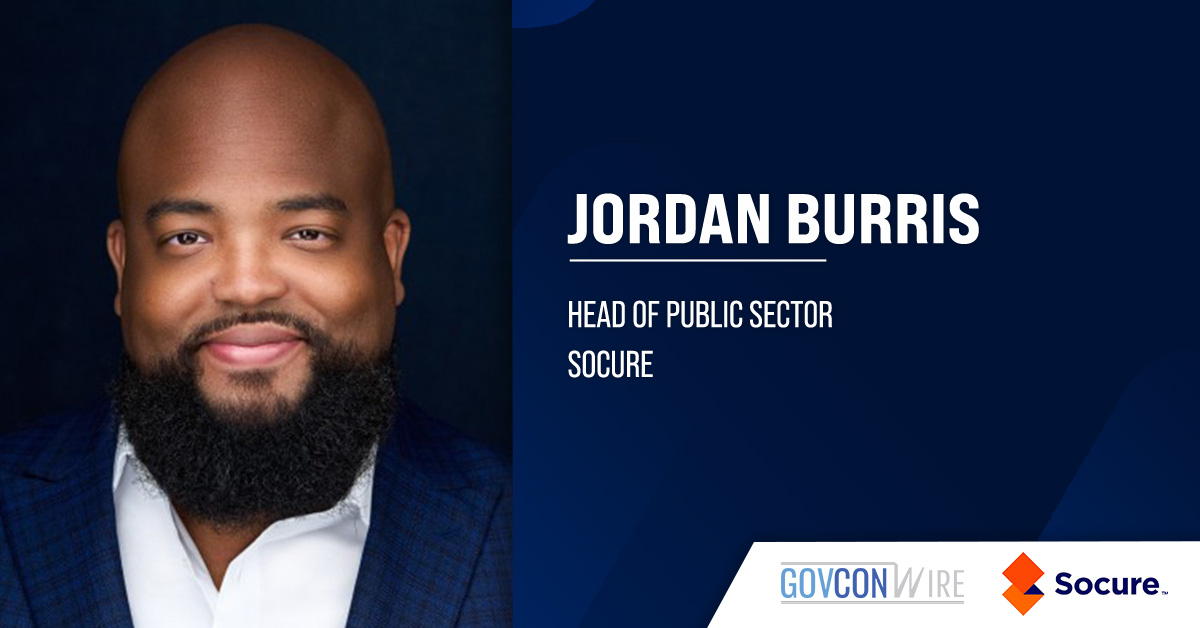
In a LinkedIn post commenting on the Fravity deal, Jordan Burris, Socure’s head of public sector, said government program integrity teams already have large amounts of data available to them, but that investigator time is still consumed by gathering information and researching cases manually.
“As I told Congress recently, we have to do a better job aligning limited program integrity resources to the areas of greatest risk. RiskOS Agents gives us an opportunity to do exactly that. We can automate much of the work required to assemble and analyze a case before it reaches an investigator,” Burris said. “The goal is not to remove human judgment. It is to stop wasting it.”
How Does the Investment & Acquisition Build on Socure’s Recent Federal Activity?
The investment and Fravity acquisition follow several recent moves by Socure in the federal market. The company launched a FedRAMP-authorized version of RiskOS to bring identity proofing and fraud detection together for government agencies, and it partnered with Thomson Reuters to combine CLEAR identity and risk data with the RiskOS platform. Socure has also published findings on AI-enabled fraud rings targeting federal agencies.
Burris has stated across these developments that AI-driven fraud threats are accelerating faster than legacy systems can address, underscoring the company’s continued focus on digital identity and fraud prevention for government customers.