


- The Pentagon is using new acquisition strategies for Golden Dome
- The program could be worth as much as $3.6 trillion over the next 20 years
- Get the latest Golden Dome partnership opportunities at the 2026 Air and Space Summit!
Golden Dome is more than just a cutting-edge missile defense system. It’s an ambitious investment in a new way of doing business with industry.
No longer is the Pentagon issuing cost-plus contracts and waiting for technologies to evolve. Instead, it’s issuing innovative, and lucrative, contracts to both primes and startups while creating strategies for alternative technologies if certain capabilities aren’t delivered on time.
The stakes are high. Golden Dome could be worth as much as $3.6 trillion over the next 20 years. Let’s dive into the most recent Golden Dome news and learn what the program means for the future of advanced space technologies and GovCon business.
There’s a panel session designed for Golden Dome industry discourse at the Potomac Officers Club’s 2026 Air and Space Summit on July 30! Dive into scaling manufacturing, workforce and supply chain capacity, and managing cost, budget uncertainty and long-term affordability during the Golden Dome Part Two panel discussion. It will feature top industry experts. Secure your seat today!
What Is the Latest News for Golden Dome?
1. Large New Awards to L3Harris and Sierra Space
The Space Development Agency on July 13 made a pair of significant Accelerated Missile Defense Tranch 3 firm-fixed price other transaction authority awards to advance Golden Dome’s infrastructure. The agency awarded L3Harris a contract worth as much as $955 million and Sierra Space an award worth as much as $798 million.
Both companies are to develop 18 hypersonic and ballistic tracking space sensor-like missile defense variant space vehicles across two orbital planes. The AMDT3 awards support Golden Dome’s space-based capabilities with the Space Force taking responsibility for sustainment.
“AMDT3 expands upon SDA’s previous and current Tracking Layer generations…marking another milestone in delivering a resilient and global missile warning, missile tracking and missile defense capability,” said GP Sandhoo, Space Force director and a speaker at the 2026 Air and Space Summit on July 30.
2. Demand for New Categories of Space Infrastructure and Technology
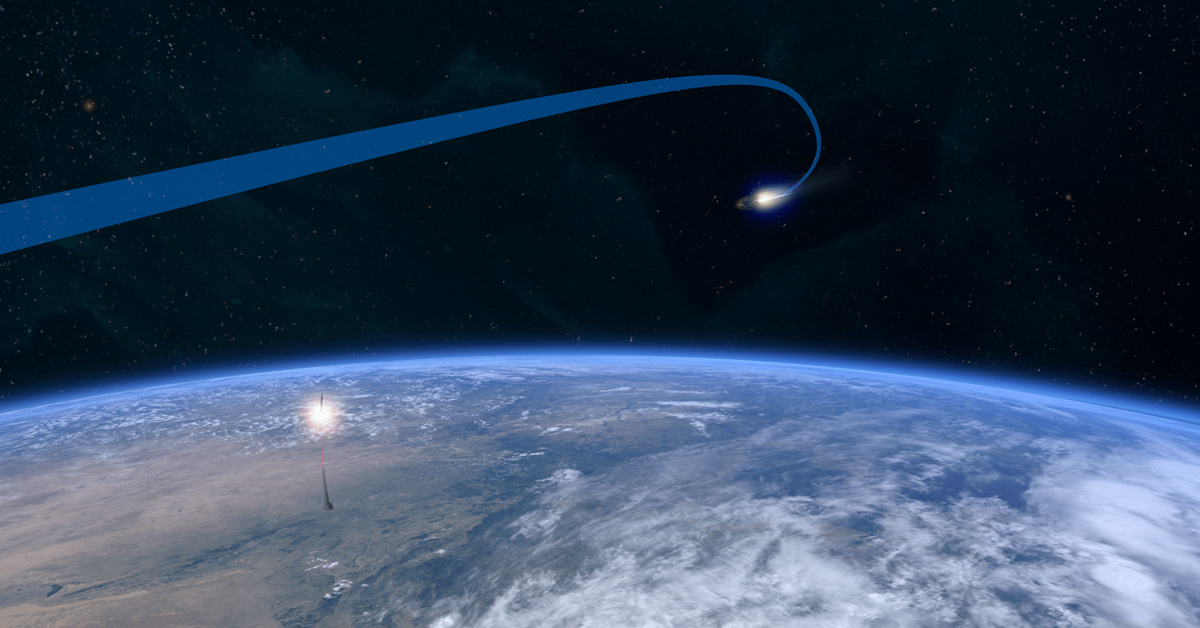
The potential for Golden Dome to deploy as many as hundreds or thousands of satellites for technologies, including tracking, communications, missile warning or interception, has entrepreneurs and investors hoping for demand for new categories of military space infrastructure, SpaceNews reported.
Firms creating orbital transportation, communications relay networks, satellite refueling and other capabilities are marketing their technologies as critical support services for a robust space-based defense system. They are hoping that if the Department of War builds a persistent orbital infrastructure, it will soon require similar maintenance, communications and logistics technologies that support complicated operations on Earth.
Star Catcher is positioning itself around Golden Dome by working on technology to beam power from one satellite to another. The company predicts an environment where spacecraft contract for electricity as a service through orbital power stations instead of creating all their own power via onboard solar relays.
Are you a GovCon technology professional? Then you cannot afford to miss the Potomac Officers Club’s 2026 Air and Space Summit on July 30. Arm yourself for contracting success in advanced space technologies like advanced optical networks and space situational awareness with the help of our esteemed lineup of keynote speakers. They include:
- Tom Ainsworth, Air Force acting assistant secretary for space acquisition and integration
- Matt Anderson, NASA deputy administrator
- Anthony Baity, Air Force assistant deputy chief of staff for logistics, engineering and force protection
- Gen. John Lamontagne, Air Force vice chief of staff
- Dr. Eliahu Niewood, Air Force director of integrated capabilities, and studies and analysis
Sign up today while tickets are still available!
3. New Third-Party Cost Estimate
A new cost estimate by the Taxpayers for Common Sense, a fiscal watchdog group, is pegging Golden Dome’s total cost at potentially $3.6 trillion over the next 20 years. This is significantly more than $185 billion projected by the Pentagon and the $1.2 trillion estimated by the Congressional Budget Office.
TCS included the following reasons for its cost estimate:
- Golden Dome would require the deployment of far more interceptors than the number of missiles it would need to defend against
- Midcourse and terminal-phase interceptors would need to overcome complex countermeasures
- Nuclear detonations in atmosphere could confuse radar systems and make it impossible to track and discriminate targets
4. NGC Teams With Apex for Golden Dome SBIs
A major industry prime announced a partnership agreement with a startup as part of an aggressive push to develop space-based interceptors, or SBIs, a key component of Golden Dome. Northrop Grumman said on June 1 that it would work with satellite manufacturer Apex to develop and deliver space-based interceptors by 2031, according to a Northrop Grumman statement.
Northrop Grumman touted its completion of key ground tests this year and its combination of advanced missile defense technologies and commercial partnerships. Apex, for its part, cited how it was specifically founded to support proliferated constellations like Golden Dome.
Northrop Grumman said it will fund demonstration of SBI systems that can intercept threats for a government prize competition, building on a $1 billion company-driven investment in missile defense technology. The company said it is on track to deliver on-orbit capability in 2027.
5. USAF Lays Out ‘Pivot’ Strategy
The USAF has developed a strategy for Golden Dome that will allow it to pivot to a new technology if a capability can’t be delivered on time, Gen. Michael Guetlein, Golden Dome director and a two-time Wash100 Award winner, told Congress. Guetlein testified that he had met with executives from more than 400 potential contractors over six to eight months and believed the program would be delivered on schedule, Defense News reported.
Guetlein said that industry collaborations were rapidly progressing as Golden Dome moves forward. He touted an “ecosystem hub” as a one-stop shop for contracting with Golden Dome.
“We are embracing industry like we’ve never embraced industry in the past,” Guetlein said.