
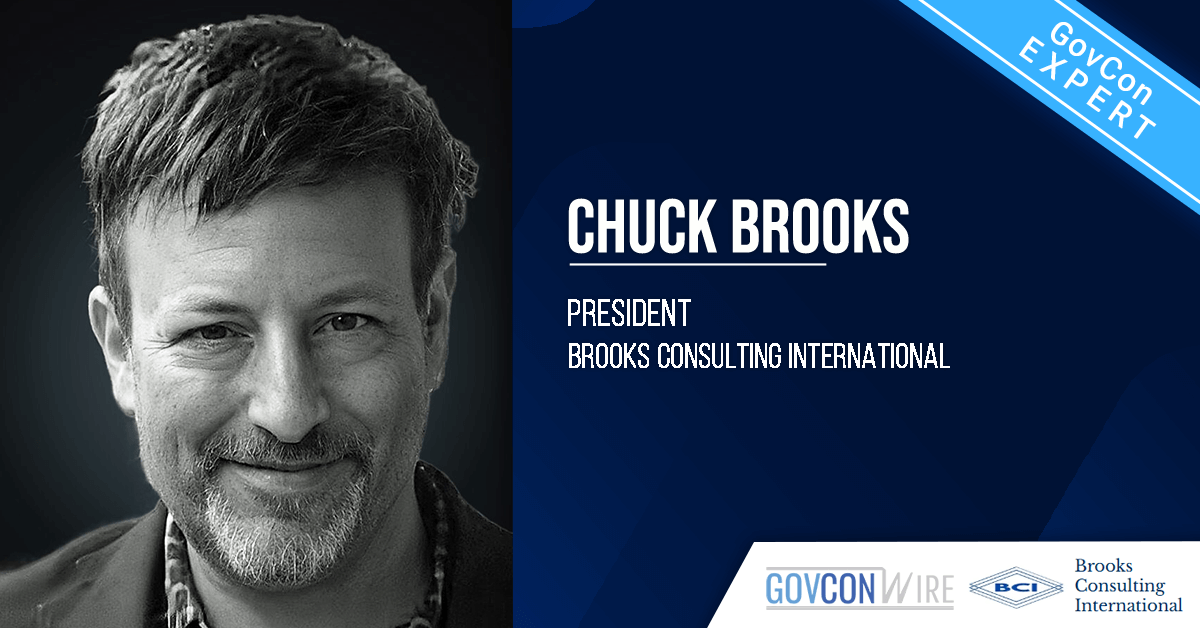

By Chuck Brooks, president of Brooks Consulting International and one of Executive Mosaic’s GovCon Experts
In a matter of seconds, an electromagnetic pulse, or EMP, could potentially render modern society inoperable, presenting an existential vulnerability to the United States. A high-altitude nuclear detonation by a rogue state or terrorist group, or a massive solar flare (such as the 1859 Carrington Event), could result in an EMP that could destroy electronics, collapse the power infrastructure and plunge the nation into chaos. Action is required in response to this clearly documented national security peril.
U.S. Energy Grid Scale & Structure
Nearly all critical infrastructure is supported by the U.S. energy grid. Three primary interconnections comprise it: the Texas Interconnected System, the Western Interconnection (Pacific to Rocky Mountains) and the Eastern Interconnection (east of the Rocky Mountains). According to the U.S. Department of Energy, the U.S. electric grid is one of the largest and most complex “machines” in the world, covering the entire lower 48 states and parts of Canada and Mexico. It is made up of over 22,000 generators, 55,000 substations and more than 642,000 miles of high-voltage transmission lines. In addition, there are about 6.3 million miles of distribution lines that serve 153 million customers.
A significant portion of this infrastructure is vulnerable and aging. For example, 60–70% of transmission lines and numerous circuit breakers are over 30–35 years old, and their useful lifespans are either approaching or having already passed (sometimes cited as 20 years for certain components). The risks of cascading failures are exacerbated by the combination of surging demand—particularly from data centers, whose power consumption has tripled in the past decade and is expected to treble again by 2028—and obsolescence. In this scenario, a single component failure results in widespread outages.
Health care, water and food distribution, banking, transportation, telecommunications and more are all supported by the grid. In addition, electricity is used extensively by the majority of other critical infrastructures. The consequences of a prolonged outage would be calamitous.
The Disastrous Consequences of an EMP Event
As per the late Dr. Peter Pry of the Congressional EMP Commission, a severe EMP could result in the deaths of up to 90% of Americans due to malnutrition, disease and societal collapse. The potential for two-thirds of the population to succumb in the event of such scenarios has been cautioned by former CIA Director James Woolsey.
Unhardened electronics, transformers and control systems (including SCADA networks) are damaged or destroyed by massive voltage surges, which are induced by an EMP. Due to the interconnectedness of the grid and the challenge of replacing large transformers, recovery may require months or even years.
X-class flares and coronal mass ejections are among the hazards associated with natural geomagnetic storms, which are unpredictable but are on the rise as solar cycles progress. In the past 150 years, there have been more than 100 significant solar storms. However, man-made threats are considerably more concerning: adversaries such as North Korea have implemented comparable scenarios, and the technology is readily available to others.
An “existential threat” is represented by EMPs, whether they are natural or nuclear high-altitude, in addition to cyber and physical risks. These threats have the potential to destroy digital infrastructure in the finance, transportation, healthcare, telecom and energy sectors.
The Intersection of Physical, Cyber & Broader Vulnerabilities (Threats)
The vulnerabilities of the grid are not limited to EMPs. It is susceptible to sophisticated cyberattacks, which are facilitated by AI, IoT/OT convergence and internet-accessible SCADA systems. These attacks include the Russian attack on Ukraine’s infrastructure and the Colonial Pipeline ransomware incident. The Government Accountability Office (GAO) has consistently recognized the increasing risks posed by nation-states, criminals and the expansion of attack surfaces through consumer IoT devices and remote access.
Aging infrastructure exacerbates all of these risks, necessitating the urgent implementation of modernization and hardening measures.
Progress & Policy Gaps
Despite the 2019 Executive Order 13865 on “Coordinating National Resilience to Electromagnetic Pulses” by President Trump, which emphasized the need for sustainable, cost-effective resilience to the effects of EMP on critical infrastructure, there has been insufficient progress in fortifying. This mandate requires renewal and expansion.
Implementable Strategies for Resilience
We must prioritize the treatment of EMP and grid resilience through coordinated efforts at the national level:
• Protecting Critical Assets: Utilize surge arrestors, neutral ground blockers (to prevent ground-induced currents), grounded conductive housings (Faraday-like shielding) and other mitigation strategies to safeguard transformers, substations, generators and electronics. Critical facilities should be equipped with microgrids that are protected from EMPs and have on-site generation.
• Redundancy and Modernization: Replace outdated components with diversified power sources, automation, smart meters and sensors. Establish resilient, smaller-scale microgrids that can operate independently and in an islanding fashion during power disruptions. Create technologies that are resistant to electromagnetic pulses (EMPs), such as optical computation or carbon nanotube memory.
• Public–Private Partnerships: Capitalize on the expertise of industry, DOE, DHS and DOW (including NORTHCOM and National Guard). Co-investment in research and development, prototyping, and implementation is indispensable, as the majority of critical infrastructure is privatized. Projects such as the Electric Grid Cybersecurity Alliance underscore the importance of collaboration.
• Policy, Planning and Training: Amend/extend EO 13865 to include mandatory standards, regular vulnerability assessments and the integration of EMP scenarios into emergency exercises. Concentrate on operational resilience and “security by design.”
• Comprehensive resilience planning for restoration following a variety of emergencies, information-sharing on threats and voltage stabilization are all examples of broader mitigation.
Real, expanding and resolvable are the EMP threat and the grid’s broader vulnerabilities. Before it is too late, it is imperative to prioritize national resilience through coordinated leadership across government and industry. Modernization, fortification and partnerships will protect the foundation of American society in a time of converging threats.