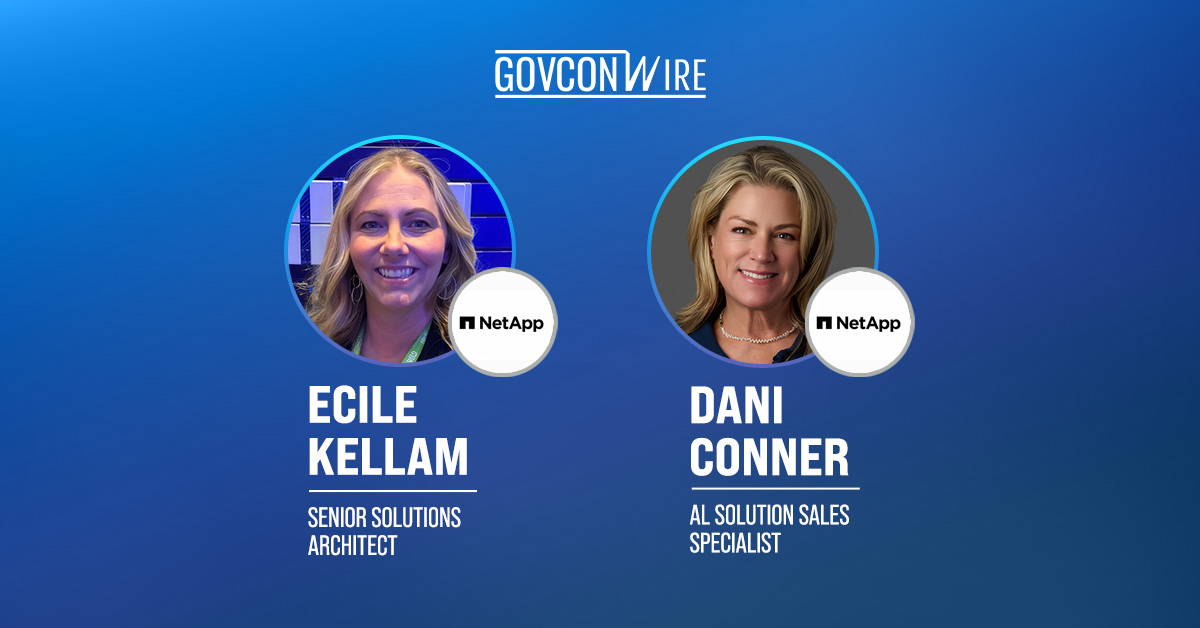

Cecile Kellam, senior solutions architect at NetApp, and Dani Conner, AI solution sales specialist at the company, said a unified data platform is critical to helping government agencies unlock the full potential of artificial intelligence.
Why Do Agencies Need a Unified Data Platform?
In an article published on Carahsoft.com, Kellam and Conner wrote that agencies need a modern data infrastructure that unifies data across edge, core data center and cloud environments.
“The goal is a single, consolidated foundation that eliminates silos and gives AI applications secure and efficient access to the data they need, wherever it resides,” they added.
How Can Security Enable Data Sharing?
Kellam and Conner said agencies could transform security into an enabler of data sharing and AI adoption by adopting a secure-by-design approach to data infrastructure.
They noted that the approach embeds cybersecurity and data governance directly into the storage layer, rather than treating security as a separate, perimeter-based function.
How Does a Unified Data Fabric Improve Security?
The authors said a unified data fabric across edge and cloud environments could help agencies improve security by providing them with full visibility and control over data.
“By embedding capabilities such as real-time threat detection and ransomware protection directly at the source, agencies can confidently break down silos while knowing their data is protected by a robust and holistic security posture,” they added.
How Can Agencies Manage Data Across Hybrid Environments?
According to Kellam and Conner, agencies must manage data across hybrid, multicloud environments to support AI workloads using a unified platform.
They noted that NetApp provides agencies with scalable platforms designed to integrate with existing systems; break down data silos; accelerate AI-driven insights; and support evolving government requirements.