

- MFC backlog more than tripled from $46.65 billion at year-end 2025
- Total backlog reached $292 billion, up 27 percent in the quarter
- The Potomac Officers Club will host the 2027 Defense R&D Summit on Feb. 4
Lockheed Martin’s missile business ended the third quarter with $142.51 billion in backlog, roughly triple the $46.65 billion it carried at the close of 2025, after booking a seven-year contract for Patriot Advanced Capability-3, or PAC-3, Missile Segment Enhancement interceptors. The company said Thursday $52.5 billion of the total traces to that award.
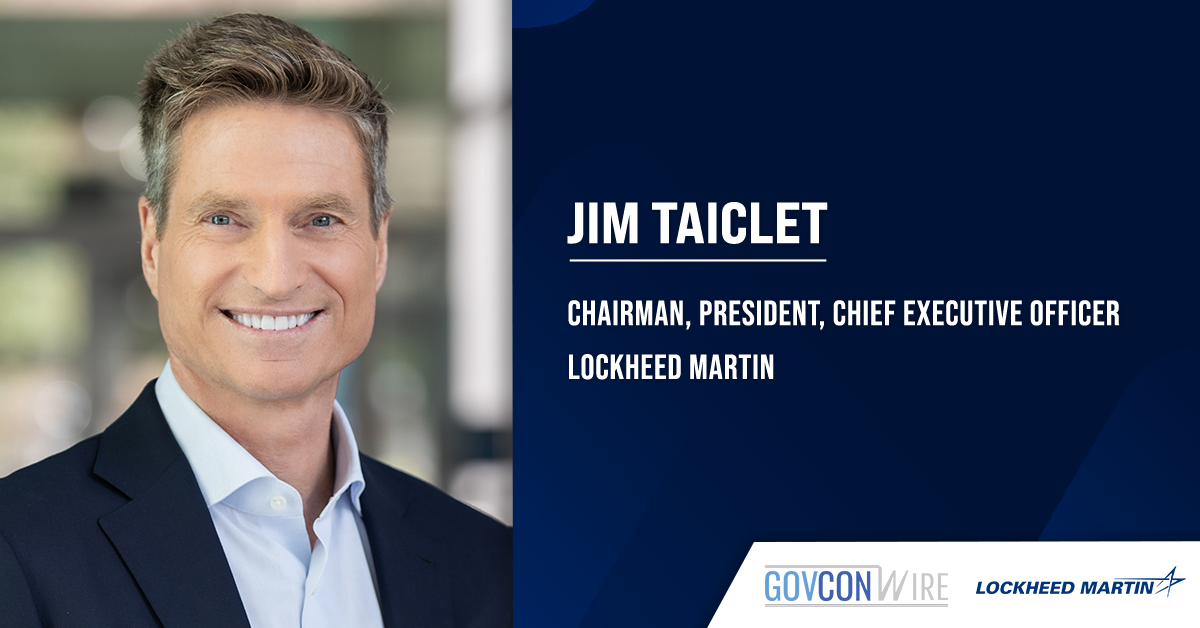
Backlog from all segments reached a record $292 billion, up 27 percent from the second quarter and $113 billion above the year-ago period, on a book-to-bill ratio of 4 to 1. In an earnings call, Chairman, President and CEO Jim Taiclet, a two-time Wash100 Award winner, said multi-year awards provide the company and its suppliers “the kind of long-term visibility that makes bold investment possible.”

Munitions capacity and missile defense remain priorities across defense modernization. The Potomac Officers Club will host the 2027 Defense R&D Summit on Feb. 4 at the Hilton McLean, where Department of War and national security technology officials will discuss advanced defense technologies and investment priorities. Save your seat now.
What Drove Third Quarter Results?
Sales rose 11 percent year over year to $20.7 billion, with all four segments growing. Net earnings reached $1.8 billion, or $7.97 per diluted share, up 14 percent. Free cash flow was $3 billion, down from $3.3 billion a year earlier due to lower customer receipts.
The missiles and fire control segment led with $4.5 billion in sales, a 24 percent increase driven by production ramps on PAC-3, Terminal High Altitude Area Defense, Guided Multiple Launch Rocket Systems and Precision Strike Missile. To support high-rate production awards, Lockheed placed a $4.7 billion propulsion contract with L3Harris for PAC-3 and, after the quarter closed, awarded Boeing $14.7 billion to triple PAC-3 seeker production and Northrop Grumman $1.6 billion for propulsion and other components.
Aeronautics grew 13 percent to $8.2 billion on F-35 volume and the liquidation of C-130 pre-contract costs. The rotary and mission systems business rose 3 percent to $4.51 billion on radar work, and the space segment grew 4 percent to $3.49 billion on Fleet Ballistic Missile and Next Generation Interceptor programs.
Lockheed Martin raised full-year sales guidance to $80 billion to $82 billion, earnings per share to $30.35 to $30.75, and free cash flow to $7.8 billion to $8 billion.
What Is the Status of F-35 Contracting?
The company remains in negotiations on production contracts for F-35 Lot 20 and beyond. Costs incurred began to exceed the contractual authorization and funding on the Lot 20 advance acquisition contract during the third quarter, and Lockheed Martin said that without additional authorization and funding, its results, cash flows and financial condition will be negatively affected in future periods.
F-35 deliveries totaled 94 aircraft through nine months, down from 143 in the same period last year. The company shifted its assumption for the next lot award to 2027. According to Taiclet, the Department of War announced an F-35 multi-year framework covering 850 U.S. aircraft over 10 years at a planned rate of 156 per year.
What Capacity Is Lockheed Martin Adding?
The company is adding 2 million square feet of facilities across eight sites over three years, with more than half already under construction, and hiring more than 3,000 workers across missiles and fire control sites this year. The buildout falls under a commitment to invest more than $8 billion through 2030 to modernize more than 20 facilities.
Lockheed’s Ultra Maritime acquisition has cleared all required regulatory approvals and is expected to close in the fourth quarter, funded with cash on hand.